Content as a Service v3 - rtcdp - Tuesday, July 15, 2025 at 14:09
JUMP TO SECTION
The state of data — siloed systems, broken experiences
How The Home Depot builds customer loyalty
Components of a unified customer profile
Build unified profiles and get a real-time customer view
The Coca-Cola Company aligns a global strategy with its CDP
Four steps to develop actionable customer profiles
Connected experiences with unified profiles in Real-Time CDP
Build unified customer profiles with Adobe Real-Time Customer Data Platform.
Learn what digital customer experience challenges brands face today and how unified customer profiles can help. You will learn what the components of unified customer profiles are, what the primary functions of a customer data platform are, and customer data platform and loyalty success stories.
Explore our guide to building unified customer profiles and driving brand loyalty using a customer data platform that works in real time.
Customer journeys are complex. People can engage with brands online, in-app, in-store, or on social media. At the same time, their expectations for personalized experiences are growing. But many companies are unequipped to manage the data flowing in from multiple sources while also juggling increasing regulations, data privacy, and a shift toward first-party data rather than third-party cookies. Companies that build unified customer profiles can bridge the gap between customer expectations and stellar customer experience.
“If data lives in different places, brands are hampered by what we tend to call data readiness — is their company’s data cleaned up and in a usable state or are there data sets that are really old and outdated, and companies need to assess what data is best to make actionable?”
Nina Caruso
Senior Manager, Product Marketing, Adobe Real-Time CDP

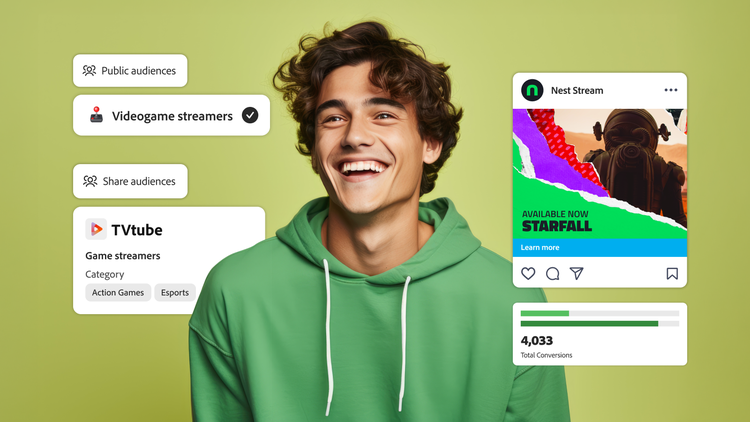
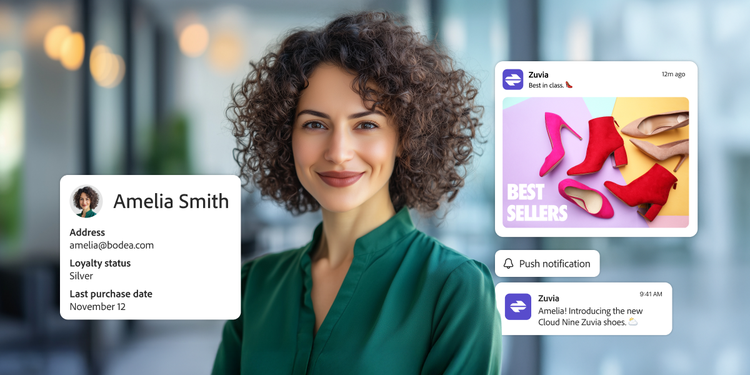
The state of data — siloed systems, broken customer experiences.
According to Adobe’s AI & Digital Trends Report, only 14% of business leaders report being able to deliver exceptional digital customer experiences that surprise and delight. Gaps between customer expectations and brand execution are a partial explanation. 71% of customers expect brands to anticipate their needs, while only 34% of brands successfully execute this for customers. Additionally, 78% of customers expect brands to provide consistent experiences across digital and physical channels, while only 45% of brands execute this successfully. It’s a high-stakes challenge — companies that can’t give customers what they want risk losing them to competitors who can. Companies are up against:
1. Fragmented data and silos.
Most companies store customer data in separate, disconnected systems — customer relationship management (CRM) solutions, point-of-sale (POS) systems, web analytics logs, and loyalty card technology. These incompatible systems make it difficult to share insights. With everyone working off a different dataset, the customer experience is inconsistent from one touchpoint to the next.
2. Insufficient data governance.
To responsibly manage sensitive customer data, you must comply with company policies and government regulations, such as the General Data Protection Regulation (GDPR) and the California Consumer Privacy Act (CCPA). Without a centralized way to manage that data or guardrails to ensure compliance, the chance of data misuse, breaches, and loss of customer trust poses an enormous risk.
“What customers expect, and where brands sometimes get paralyzed, is how to deal with governance of data — how to take in customer consent and how to make sure that they have a mindset of how to safely talk to the customer while facilitating and growing a relationship that’s built on mutual trust.”
Nina Caruso
Senior Manager, Product Marketing, Adobe Real-Time CDP
3. Preference for trusted data sources.
For years, companies relied on third-party cookies to track users across websites and deliver more relevant ads and offers with the goal of acquiring new customers. But privacy concerns and greater consumer control over the use of third-party cookies mean the tides are shifting, with first-, second-, and trusted third-party data now rising to the top. Zero-party data, information requested from consumers when they sign up for an account, will also be a key component of your data strategy.
To clear these hurdles, companies need the ability to convert customer data into activation-ready profiles that are always up to date.

How The Home Depot builds customer loyalty.
Finding the right tools, materials, and information you need in a huge home improvement store with millions of products can be overwhelming. The Home Depot found a way to help customers with a cross-channel strategy. Using Adobe Real-Time Customer Data Platform, the company has created 170 million unique customer profiles, gathering data at each touchpoint, whether it’s website visits, in-store sales, call center interactions, or returns. It now knows where and when to send a message to help customers with tailored information and offers for their kitchen remodel, deck build, or any other home project they might be working on.
Using Adobe Real-Time CDP, The Home Depot creates high-value audiences and responds to insights across channels with deals, relevant messaging, and inspiration. With strict data governance and privacy controls in place, The Home Depot has built trusted relationships with customers who share their data in exchange for a better experience on any channel.
With unified profiles activated in Adobe Real-Time CDP, The Home Depot has seen:

faster delivery of personalized experiences.

increase in personalized campaigns.
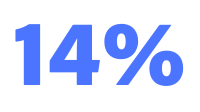
increase in year-over-year sales.
“By unifying our data, we started waking up to the fact that our customers’ trust is an extraordinarily valuable asset. They were telling us exactly what they were looking for, and we needed to be more aligned with ways to help them.”
Melanie Babcock
Vice President of Integrated Media, The Home Depot
Components of a unified customer profile.
There are three key elements you need to build unified customer profiles.
1. Trusted data sources.
The foundation of your customer profile is the data you collect about your customers. Whether zero-party data from account signups, first-party data from web, mobile, and offline interactions, or second- and third-party data you share with partners, it must be clean, flexible, standardized, and easily accessible for real-time experiences. An open-source data model like Adobe’s extensible Experience Data Model (XDM) normalizes and standardizes data while also providing a way to store metadata about user permissions and preferences. With clean data, machine learning is better, faster, and more effective. “When you think about how companies and the technology that support them are siloed, there’s data sitting all over the place,” Caruso explains. “Folks want to bring that data into Real-Time CDP for the purposes of activation. The XDM is what customers are using to normalize it and reconcile it so that it’s understandable to the rest of the company.”
2. A stellar center of excellence (CoE).
Developing a new way to manage customer data takes more than just the right technology. It takes business acumen and the right team to initiate change. That’s why you need an audience center of excellence — made up of CIOs, CMOs, departmental heads, data scientists and legal representatives — to provide oversight and create best practices to ensure the success of the transformation. These cross-functional teams work together to identify the data each department needs to improve their business processes, reconcile disparate data sets, develop a segmentation strategy across teams, set enterprise key performance indicators (KPIs), and create an activation roadmap.
3. A real-time solution.
While many CDPs were designed as point solutions for specific functions, a CDP that works in real time to create and enrich unified customer profiles as customers engage with your brand provides value to the entire company. Your technology should be scalable and robust enough to be an enterprise solution, and not just a departmental tool. With an enterprise solution, you can share and activate customer profiles across channels such as web, mobile, email, call centers, and more, extending the value of other technology investments. This accessibility means better resource use, like cutting down on IT requests, to deliver value to the entire company. When the CDP is enhanced with artificial intelligence (AI), it can surface rapid insights to help you prioritize high-propensity profiles.
Build unified profiles and get a real-time customer view.
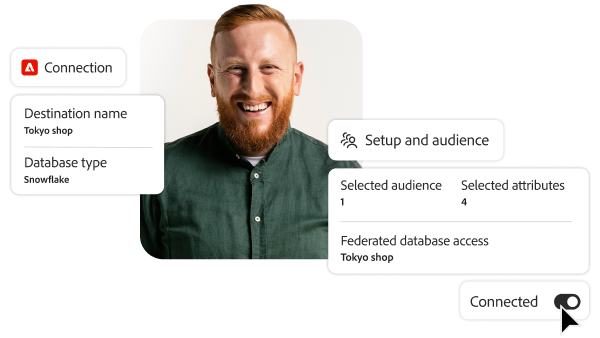
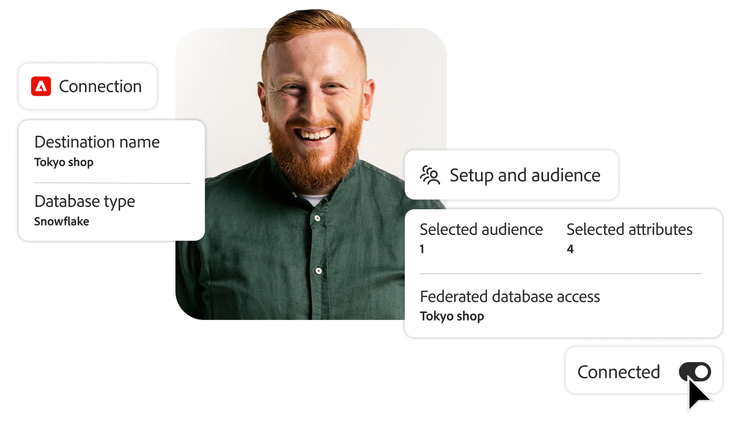
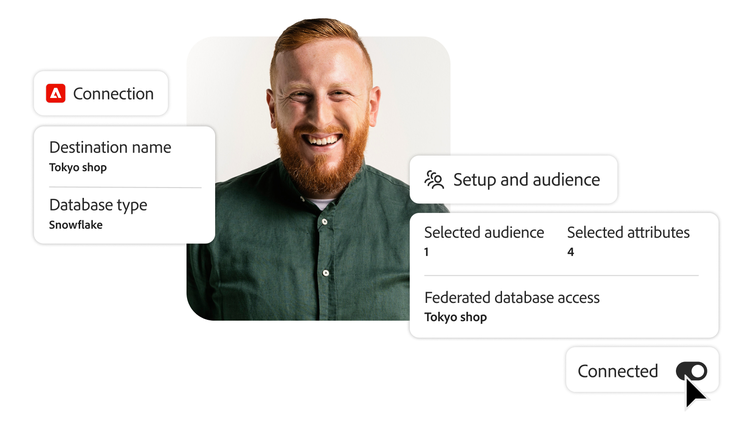
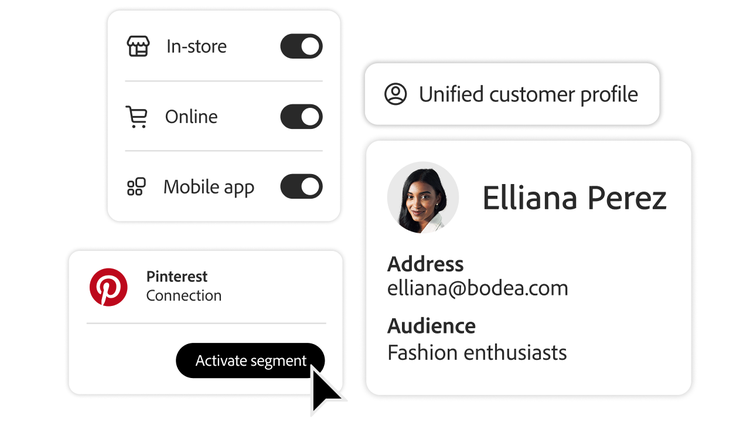
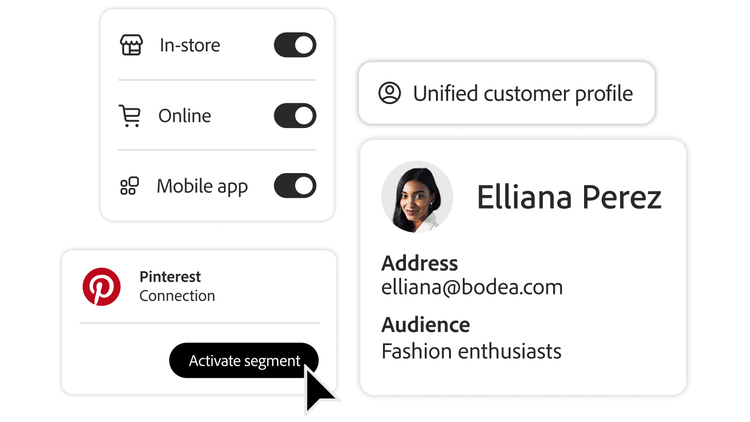
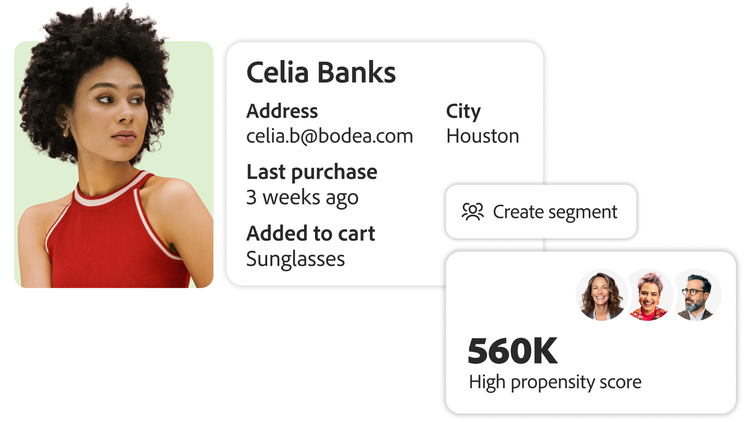
A CDP collects your data into one place and unifies it into activation-ready customer profiles that you can immediately access for personalization. You can then send these profiles to destinations according to your marketing strategy and help deliver the next best actions exactly when they will make the most impact.
The right CDP is privacy-centric, with data usage labels and policies built in and customizable, to ensure compliance with company and government regulations. A CDP works with anonymous and known customer data and can stitch together personally identifiable information (PII) such as names, street addresses, phone numbers, and email addresses across customer data sets, based on the customer’s or company's needs. You can use a CDP to identify repeat visitors and tailor messaging accordingly. This known data can come from your CRM, POS system, phone communications system, or any other business system that collects data. In contrast, pseudonymous data (whether first-, second-, and third-party data) provides you with context, behavioral, and business data to give you information that you can use to make better business decisions.
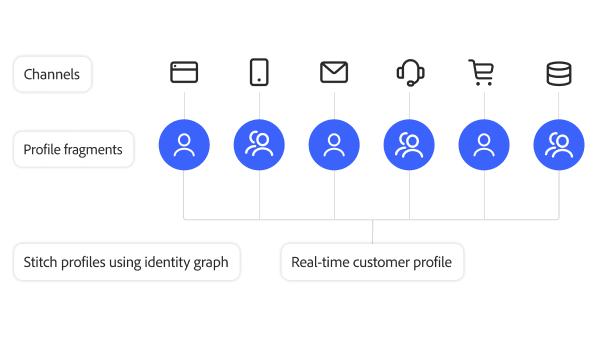
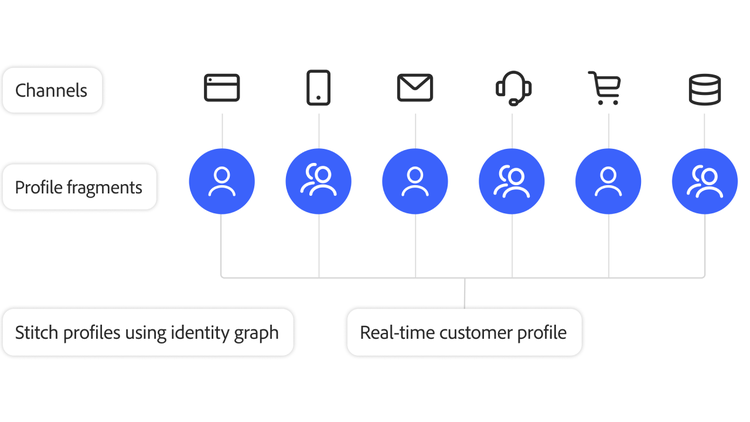
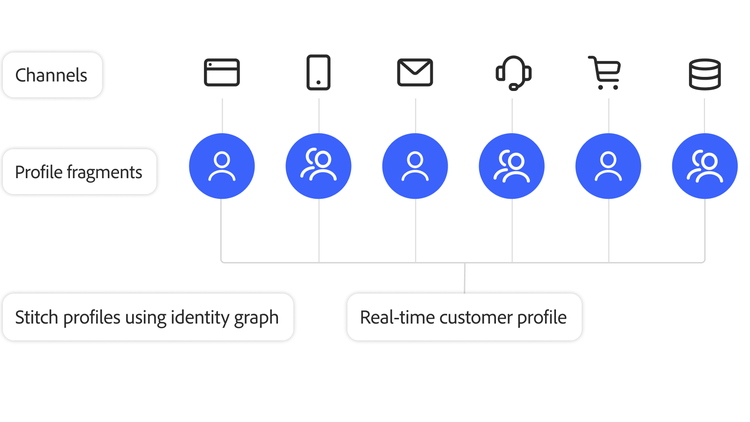
Four of the core functions of a CDP are to:
1. Build a unified customer view.
It starts with bringing customer data together into unified profiles. A CDP democratizes customer data from myriad sources with speed and scale and connects it all into a 360-degree view. This easy and instant access to information helps you determine how to nurture customer relationships, create exceptional experiences, and increase customer lifetime value. With a CDP that processes and activates data in the moment, you can access insights as they happen and deliver relevant information to customers while they’re still engaged.
2. Enhance profiles.
To create exceptional experiences that last a customer’s entire lifecycle, profiles must be dynamic. A real-time CDP continually adds data as it is gathered to reflect exactly where the customer is and what they want right now. You can also extend beyond first-party data sets to find insights and scale with access to second- and third-party data.
3. Build audiences.
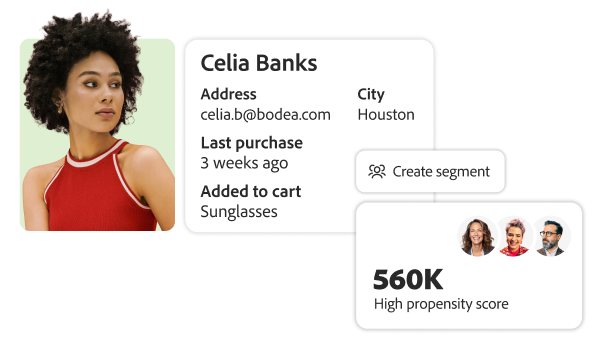
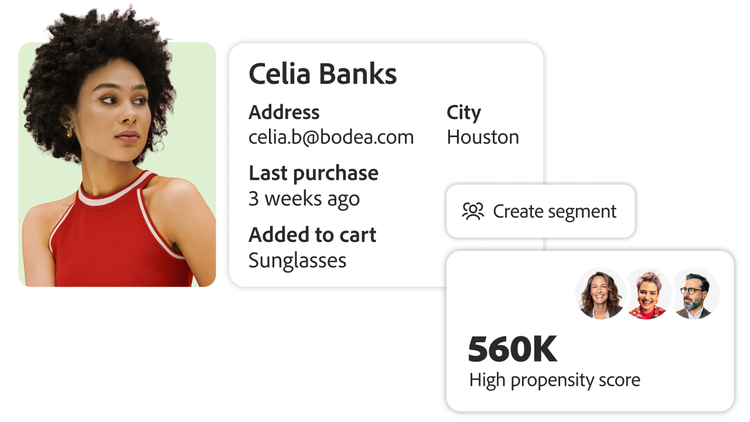
In a real-time CDP, you can segment data sources to help you market to your desired audience. Data flows in and is organized at speed. And you can find additional insights and scale using built-in models like AI for propensity scoring and look-alike audiences.
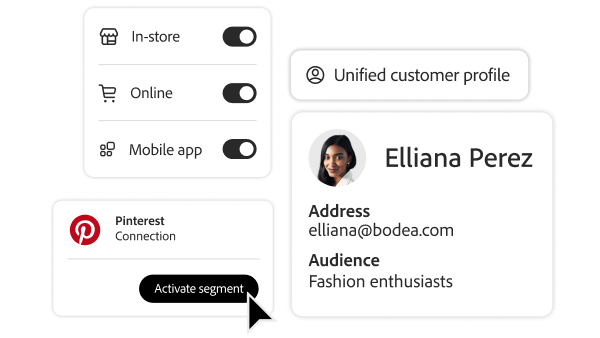
4. Activate profiles to destinations.
With audiences at the ready in your CDP, you can send them to the destinations that are integrated in your system or ones you’ve configured with APIs. This is where personalization happens.
“When you think about this through the lens of activation, this unlocks the capability to deliver these highly personalized and relevant customer experiences that make someone want to buy, make someone loyal to your brand, make someone want to engage, make someone want to continue further down the funnel,” Caruso says. She then adds, “Being able to have customer data you want to action on in place and then deploy it into relevant audiences in the moment to impact what that individual sees based on everything we know about them is what creates differentiated customer experiences.”

The Coca-Cola Company aligns a global strategy with its CDP.
Understanding customers is a challenge for consumer-packaged goods (CPGs) companies because they rarely sell directly to the customer. As a result, they must make the most of the data they can acquire. With 250 brands and two billion customers, harnessing insights and delivering personalized content to every customer of The Coca-Cola Company is a tall order. With Real-Time CDP, the company brought together its regional CDPs to create a single view that gives real-time insights into global customers. The company organized a CoE to roll out the new strategy. During just the first phase, they created 98 million profiles representing over 100 countries. By the end of the transfer, every customer was reflected in the CDP.
The goal is to allow the company to target consumers by drink preference, lifestyle, location, and more. With a global strategy to streamline all data in one system and create unique profiles of every customer, The Coca-Cola Company is achieving this goal, and more.

open rate for personalized rewards emails, compared to the standard 3%.

uplift in click-through rates with personalization.

email journeys running in multiple languages.
“Coca-Cola consumers interact with us everywhere. They’re scanning QR codes and exploring online content while buying their favorite beverage at stores. The ability to bring all our consumer information together — in real time — is critical to helping us engage with billions of Coca-Cola consumers around the globe.”
Keith Bartig
Director of Precision Marketing Technologies, The Coca-Cola Company
Four steps to develop actionable customer profiles.
1. Integrate your data.
From your first-party data across channels to trusted partner data, your profiles are constantly updating with data flowing in from multiple sources. You can centralize all of it with a single CDP that makes it easy to manage and activate data, no matter where it originated from.
2. Synchronize offline customer data.
Because online data only tells part of the story, it’s important to consider offline interactions too, including those from direct mail campaigns, brick-and-mortar stores, and in-person events.
3. Standardize data.
With a standardized data model, you can unify and structure customer data using schemas. This capability organizes data in a way that it can be used across systems, teams, and tools, and can be turned into actionable insights that can improve customer experience.
4. Uncover insights faster with AI.
With so much customer data streaming in every second from different locations and devices, you’re going to need help keeping up with it all. A CDP with embedded AI can use data to derive insights with more precision than humans can. That knowledge empowers you to quickly shift strategies and increase customer retention. With AI, you can ingest, unify, and activate data faster. You can quickly create audience segments, understand where users are in their buying cycle, and who your high-propensity customers are. In fact, you can do all this as it’s happening. When you’re able to react in the same moment a customer is engaging with your brand, you’re meeting them where they’re at — strengthening that relationship with offers and messaging in response to real-time behaviors.
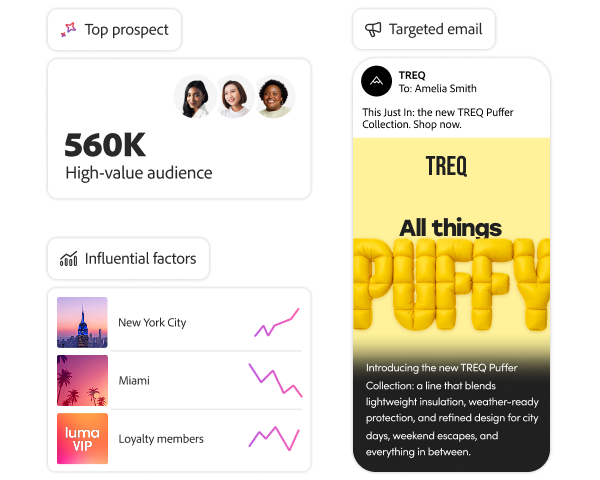
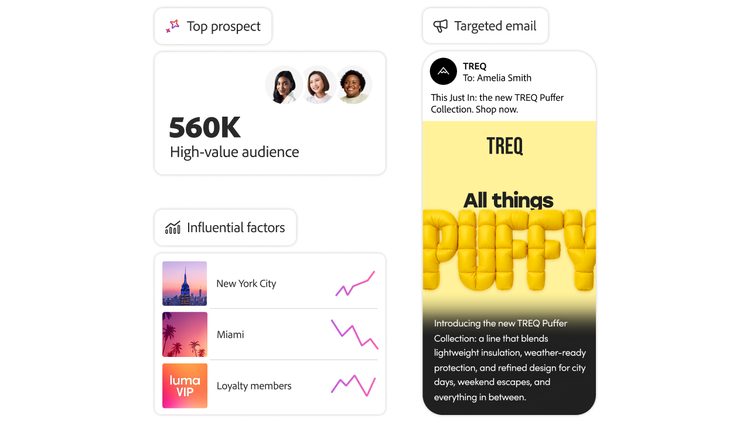
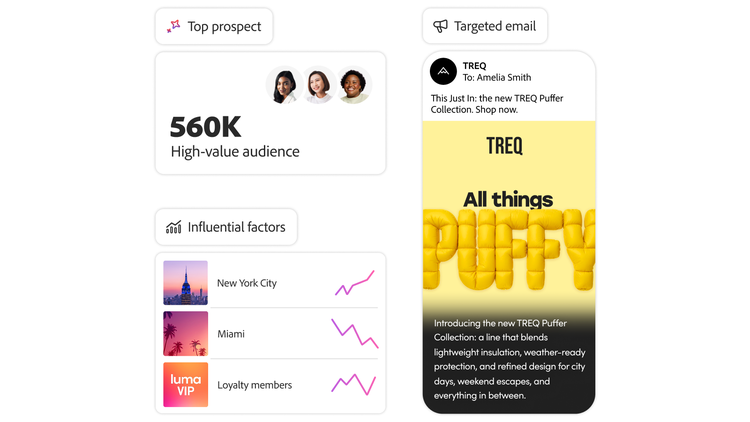
With its look-alike audience feature, Adobe Real-Time CDP can use insights from unified profiles to find high-value prospects with similar attributes to expand your top-performing audience.
Connected experiences with unified profiles in Real-Time CDP.
Adobe Real-Time CDP is designed for the digital economy. With the ability to unify data from every touchpoint into unique customer profiles, this AI-powered tool can ingest and analyze insights right away to deliver in-the-moment messaging that speaks to every customer. It’s time to take personalization to new heights with unified customer profiles. Data and a best-in-class CDP are your keys to maintaining a competitive advantage and providing great customer experiences at scale that attract loyal customers from the moment of first contact. Learn how to create and enhance your customer profiles so you can personalize the customer experience at every touchpoint.
Sources
2025 AI and Digital Trends Report, Adobe, 2025.
Charles Menguy, “Look-Alike Audiences: AI-enabled Audience Expansion in Real-Time CDP,” Adobe, October 2023.
“In store. Online. The Home Depot inspires the whole experience,” Adobe customer story for The Home Depot, August 2022.
Nina Caruso, product marketing manager, personal interview, Adobe, May 2024.
“Refreshing billions around the world,” Adobe customer story for Coca Cola, October 2022.
Title
Elevate customer experiences with unified profiles.
cardDate
2026-02-02
cardImage

CardDescription
Deliver tailored experiences by creating unified profiles and leveraging real-time insights from your CDP.
primaryTag
caas:content-type/guide
Tags
caas:content-type/guide, caas:products/adobe-real-time-cdp