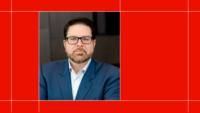
[Music] [Pedro Monjo] Good afternoon, ladies and gentlemen. Welcome to this Adobe Summit session, and thank you for choosing us. My name is Pedro Monjo. I'm an Adobe Managing Principal Enterprise Architect. I know that's a mouthful. And I'm also a blogger in case you don't know it or how they call us today, content creators. I have my own blog called pedromonjo.com, where I write about all sorts of things regarding Adobe, my personal experience.
To set the context, I need to remind you that we are in the customer acquisition track that is the top of the funnel. And today, we're going to dissect how Sling TV converted anonymous visitors into paying customers. Specifically, you will learn a different data-driven personalization approach which is very well suited for new visitors, anonymous visitors.
And without further ado, let me introduce you to Anish. Anish, welcome. Thank you for being with us. And by the way, did I hear that you won something yesterday? [Anish Raul] Oh, you may have in fact, so-- - Congratulations. - Thank you. We won an Adobe Experience Maker Award in the Disruptor Category, and I'm excited to be sharing a bit of that story here. Thank you for joining us this afternoon. As a personalization enthusiast, I wish I could greet and welcome each one of you with your names, but that can't happen right now for reasons that we will discuss throughout this presentation. This presentation is called Before the Login. That's because one of the biggest opportunities for customer acquisition like Pedro said-- Oops. One of the biggest opportunities for customer acquisition like Pedro said, we found that pre-logging on our websites. Okay? I'm assuming most of you are e-commerce enthusiasts or operate a website or just keen on learning how to market on a website to some extent. You'll agree that there's two parts on any website. One is before the login, one is after the login. Okay? And in our experience, we found out that there is a great divide in customer experiences. You've got the area before the login where most of your customers are anonymous. You don't know who they are, you don't know what they want, you know they're on your website, but what do you do with them? And then there's all the goodness that comes post-login.
Pre-logging, there's no profile data. There's limited media markers or which channels they came from. Therefore, there's limited personalizations. Post-login, however, there's profile data, there's past purchases, there's predictions you can make, and thereby use those signals and personalize to them. Okay? Now here's a quote that I found which really resonated with me. "If you wait until your customers tell you what they want, you're already too late." This reminds me of an experience back when I was living in New York. Every morning, I would go to this galley on the corner of my street. As soon as I walk in, even before saying a word, the guy knows what I want, a Brooklyn Hero and a Coke Zero. A Brooklyn Hero and a Coke Zero every single day. Best customer experience of my life. This guy sound familiar? You know, Anish, I have exactly that same experience. Talking about 15 years ago, I was living in Madrid, and I would do my grocery shopping every week on a Friday evening at a supermarket. And next to the supermarket, there was a Starbucks. So when I left the supermarket with my wife, we went to this Starbucks, and we always ordered the same, a chai tea latte with soy milk, tall size, in a mug. And I started noticing that the barista, when they saw us coming, even before we arrived, he would start preparing the drinks for us. When I arrived, the drinks were there. All I had was to pay. That was an awesome customer experience. I could do with a chai tea latte right now.
You know what that makes me think too, Pedro? There was a time when both you and I, we walked into these businesses for the first time ever, right? The business owner did not know what we wanted. We placed our first ever order, maybe we went back in there consistently and we started building on top of that.
Now what if we could do the same thing or what if any business could do the same thing, the very first time someone lands up on the website, okay, on the first interaction. That's sort of the premise of what we'll be talking about today.
Now we have the very famous marketing funnel. I'm sure you've seen one version of the other of this throughout the day. But let's talk about this in the context of our website. On top of the funnel is when you've got traffic coming into website. You've got visitors coming in. If they're interested, if they like what they see, they'll begin to engage with your content. They're moving deeper in the funnel, right? And then the way at least our Sling TV website is set up is you have to sign up to make a purchase. Okay? So you want to see how much does this purchase cost me. You will have to create a login. You have to add your products and then eventually convert. Okay? But here's the thing. Speaking about just the upper funnel, there's very limited markers on the people coming into the site. Why? Because majority of your traffic or majority of your audience does not click ads, but that doesn't mean they don't like you. They see the ad, they remember you, but the only time they'll probably come to your website is when they experience a problem that your ad promised or that your service promised. Right? The average click-through rate across in this case is between 0.5% to 3%. Now that means people are showing up on the website, but we don't know how they came. We don't know what they saw. How do we personalize their experience to them? And that actually tells us, people are coming to the site, we don't know how they came, we don't know what they saw. But when they do show up on the site, it's a chance 90% of these visitors are ghosts. They are anonymous visitors. We don't know who they are. We don't know what they're looking for. The website is probably not optimized to match their individual interests. They might browse around, but what we are doing is we are showing everyone a one-size-fits-all experience. It's well guessed that's moving to work to convert the majority of the customers, but it's just not personalized. Okay? Now, Pedro, why do we have these ghosts? Yes. So you will notice that I will talk more about the technicalities. I will not get into any deep technical details. I'm sure it's for all of you. But let's talk about cookies. So at Adobe, we identify visitors through cookies. In particular, one cookie that's called the AMCV cookie. This contains a unique randomly generated ID.
So when do we generate this cookie when there isn't one? And when does this happen? For example, first-time visitors, as a typical case, that's what we are talking about today. Second option, cookies expire. You have to set an expiration date. For the AMCV cookies, usually two years, but eventually they expire. Or many users are now regularly deleting cookies because they have privacy concerns. And if it's not the user, it's the browser doing it proactively, and I'm looking at you, Safari.
Or maybe the user is just using incognito window. So with all of these cases, what we see is that since we have generated a new ID, we have no previous history about them. We don't know because with a cookie, we can stitch hits like page views, clicks, whatever. But if we don't have the same idea across all of those events, we don't know what happened in the past. So in a way, if you think about them, they are ghosts because you see them, are they even there? You have many questions, but we know nothing about them. That's the story. And the worst of all, those five cases here look exactly the same. There is no way I can distinguish a first-time visitor or Safari clearing cookies for me. So that's why we call them ghosts. Oh, thank you for that, Pedro. Now we know what makes a ghost [INAUDIBLE]. What does a ghost love to do? Well, they love to ghost. Look at the bounce rates on the screen here, okay? Anywhere between 35% to 45% is considered to be a good bounce rate, which means there's a chance half of these visitors who are coming to the website, they're not even engaging. If your graphic doesn't see something that instantly connects with them, they will not engage. If they don't engage, how do we personalize to them? You may have all seen while shopping on Amazon, you may also like or on YouTube when you start watching the creators videos and suddenly those recommendations start coming up. That's because at one point you go with the website, "Hey, this is what I like. This is what I want to watch." What if half of the traffic isn't even going to engage? Well, what do we do? And that brings us to the one-size-fits-all experience. We saw all of these challenges stacked up. Let me talk about one last challenge that all of us in this room faced every day, every week, every year. It's that media's becoming more expensive. Advertising's becoming more expensive every year. It's becoming more expensive to acquire new customers. All of us love free trials and discounts, right? Who's filling the bill for that? The business, right? Also, there's an attention deficit. Session durations are shrinking across devices. People just don't watch ads anymore. So we live in a three-second world. We got to show something that resonates with someone hoping that they remember. When they do remember, right, they come to the website, we have to show them an experience that works for everyone, and hopefully, they can work. Okay? Now with all of these-- Let me explain an anecdote. Sorry. Not interrupting, but interrupting. No, no, no go for it.
That was 2008, 2009. I was at a conference, and we were talking about CPC, about those prices that you can see here in this diagram, and someone mentioned that the keyword asbestos attorney had a bidding price of $100. So let it sink. $100 per click was how much those attorneys were willing to pay. I mean, that was madness. When was this? 2008, 2009. Imagine paying as much for a click and still having a chance of someone bouncing. That's got to hurt. It did. Now that we think of all of these challenges, right, you've got more expensive media. You've got a chance that someone will bounce. You got to make something relevant to the users that's coming onto the site. All of these challenges make me think that, "Hey, keeping a visitor on your website is no less than a statistical miracle. Okay? Thank you for the laugh. Yeah. We are in Vegas, and well, let's leave the statistical miracles for the casino or the roulette table. We try to decode this matter of chance and try to figure out the science behind it. And all these situations that I just mentioned, that's exactly where we were on sling.com a year ago. We had actionable signals on about 20% of our traffic which means 1 in 5 users. Now that one user that we do have really good actionable signals on, that user is logging in. Okay? Everyone else is faceless. Can you imagine being at a dinner party like this? That's a creepy experience. Right? Someone's wearing a football helmet, okay, they're probably interested in football. Someone's covering their face with a phone, okay, this is a mobile visitor, we need to be mobile first. Great. One lady with a newspaper. I know Liz. Hey. Would you like to buy a news pack? Right? So all of these things, these were the challenges that we are facing, but they did not stop us from personalizing user journeys even back then. What we did is what you would typically call a classical approach to personalization. Let us walk through that. The first one is your clickstream-based personalization. If you follow the mouse click around, what is the user doing on sling.com? If you come to sling.com, our homepage, and you're going to a news landing page. I can say yeah, this person probably is looking for news. Let me lean into that signal. You go to the NBA landing page, it is March Madness today, right? This person is probably interested in March Madness. Let's speak to that. But the strength of this is it's the customer telling us what they want. That's great. We can rely on that signal. The weakness is very few people engage. - What do you think about that? - Yeah. So if you think about this from the more technical perspective, when a user clicks on a link, we can track that. We can use Web SDK to capture all those links, those interactions, and send them to the Edge network, the AEP Edge Network. With this, we can create segments that can then be shared with Adobe Target for personalization. That's the ideal situation and this is when if we have someone clicking, that is when we can use that information. Because remember, when someone clicks, they are telling what they like. So you have 1,000 clicks-- Sorry, 1,000 links in a web page and you only choose 1 or 2. So that's actually giving you a vote of what you're interested in. But we've already been talking about that from the beginning. What if they bounce? We have not had this opportunity to get that click, that even first click. So that option does not seem to be a big one, a good one. If you wait for a customer to tell you what they want, you're probably too late. That's how we started this. I love this signal. It's the customer telling us what they want. Let's try and predict it. The next one is profile-based personalization. Remember that one in five people that we do have signal on, these are people who are logging in. Once a user logs in, you've got the CLP kicking in. I'll let Pedro talk all the technical talk. But you've got a unified customer profile, right? You've got an email ID, you've got a name, you've got past purchases, you've got all the good information that you can try and leverage. Strength is, gives us more precise, more data-driven. Weakness, it's just a smaller pool. It's not available for true prospects. - How does this work, Pedro? - Yes. So if you think about that, with existing customers in AEP, you would have their profiles. And I also want to see this approach like an augmentation of the previous one. We also have the clickstream. The moment you log in, AEP can marry the visitor data, so profile information plus clickstream anonymous data. So we can combine the two, and we can create a bigger, richer profile that we can use for further personalization in the same way I was explaining before. But no, I'm not going crazy. This is the top of the funnel, and they are not customers, let alone they are not going to log in. So, again, this second option, very useful. I'm sure you're using it, but useless for the top of the funnel or customer acquisition. Thank you. And the last one is your first page-based personalization. Every time someone comes to the website, they are leaving breadcrumbs. We know what geographical market you came from on SLING. If we know you are in a Lakers market to watch the game, we will try and recognize and then speak to it. If we know the Chiefs are on and we live in Kansas City, we'll probably try and speak to that. Right? If we know what UTM code you came through, like what ad you clicked and you came to your site, we can try and speak to that. Again, who's clicking through ads and the amount of things that we can do is again quite limited. Pedro, you spoke about Safari as well. Yes. And that also plays in here. Well, from the three options that we have showed you guys so far, this one is probably the best one for first-time visitors because, yes, when someone clicks on a link that leads you to your website, at least you know where they are coming from. That's something. Yeah, not a lot, but something. If you can control that link, you can put those UTM parameters or if you're using Google-- Sorry, Adobe Analytics, you would have maybe the CID parameter, which you can use. But what if they come directly? That's not going to be useful. They will just type www.sling.com or organic search. Let me share also with you a bit of nostalgia. I remember when I started working with Adobe Analytics many years ago, in the referrer of any search query, you would get the search term, so the keyword that the people had been typing. That was like gold. You would know what they were searching for and how they landed on your website. But citing security and privacy concerns, all search engines have deleted that information. So, again, unless you can control the link, that option, it's probably not the best. Oh, that's fascinating. It's a bit troublesome from the privacy concerns, very real. But as an e-commerce customer acquiring person, if I knew what someone was looking-- I know. I know. It's such a good signal. But we don't make the rules. We don't make the rules. That's true. So all of these challenges led us to think, what if we knew exactly what would make someone stay? Okay? AKA what if we had true anonymous visitor personalization? Pre-login personalization for unidentified users. Just what if we knew what someone was exactly interested in the moment they came on to the site? Can we then tailor the site experience even before they log in or even before they engage? Can we show you something that speaks to you in a way that makes you engage, makes you take the NBA, the next best action? Right? That would allow us to do personalization at the speed of thought, oh, it's such an exciting idea. And then we try to decode it. And this is how we try to solve for it at Sling TV.
We partnered with TransUnion. TransUnion is one of the largest credit reporting agencies in the country. They have a proprietary household segmentation platform called TruAudience consumer insights. What this platform does is it segments the entire American household population into 172 segments. Each of these segments have more than 15,000 attributes. Something as basic as what's the age, what's the income level, what's the location. There's something very relevant for us like, "Hey, what would this person probably like to watch? What have they watched in the past 15 days, 30 days, a year? What is their subscription history looking like? Are they more likely to be a cable TV consumer? Are they more likely to be a live TV streaming consumer?" And that signal we can try and leverage. You guys are with me so far? Making sense? Right, good. So you've got the entire American household population segmented into groups. On this platform, what that allows us to do is, hey, we can break this up into different smaller segments. Give us sports viewers. Give us news consumers. Give us someone who would be what we call a cord cutter. Someone who was a cable subscriber and is now cutting the cord and coming to live TV, like online TV streaming. Someone who is a South Asian living in America. Someone who likes entertainment. But all of these good signals, in theory, if we had access to that, we can try and lean into that. Okay? Once we set this up on the back end, like we got this set up, we got this data ingested, one big thing happened immediately.
We identified three times more users than before. This is where we were at around this time last year. Okay? Actionable insights in about 20% of visitors.
As soon as we got this third-party data, our signals went up even pre-login. So we have a probabilistic idea of what someone might be interested in on their first visit. Does that make sense? Now if we can speak to that on your first visit on the top of the funnel, we can personalize our copy and offers. We can try to show you content that is relevant to you. If you see something that you like, you're naturally curious and you want to take the next best action which may be, "Hey, let me check out what this offer is." Thereby widening our middle funnel, deeper in to the funnel, you make the upper funnel more relevant. You've got a lot more people engaging with the website. Thereby you have a lot more people potentially converting. That was the hypothesis we were working with. Now, Pedro, how do we put this clearly into practice? Okay. So as you can see, Anish has been explaining for 20 minutes or so a hypothesis.
How do we convert this hypothesis and turn it into action? Let me introduce you to the virtuous circle. How many of you are familiar with the concept of virtuous circle? A few hands. - I know a vicious circle. - Yeah. I'm sure everybody knows what a vicious circle is. In summary, a vicious circle is just like a downward spiral in which with every iteration, things get worse. Whereas a virtuous circle is the opposite. It's a upward spiral in which every iteration improves something, whatever you wanted to improve. So how do we apply this? Think of the typical campaign, tends to be linear from brief to activation, to measurement.
So what if at the end of this campaign, I create reports, but I also get insights. And, actually, I have a blog post where I talk the difference between reporting and insights.
In this case, where Sling TV is using Adobe Analytics. So the insights are learnings, things that went well, things that did not go well, things that they missed. Take this information and send it back to the beginning of the next campaign and use those learnings and do that constantly and iteratively so that you get a long list of learnings that you should apply to all your future campaigns. Now just for the record, I've mentioned Adobe Analytics. Personalization was done by Adobe Target, and I think I have here the person who has been working with Adobe Target for a very long time. And then also, Real-Time CDP, of which you are also an expert, I believe. So now that I have explained this setup, now, Anish, how did you apply the virtuous circle to Sling? Well, thanks for summarizing that. Here's how we went about it, okay? Quick recap. We saw the challenges because a lot of anonymous visitors, we don't know how to personalize to them.
We got this exciting signal that tells us who is probably coming to the site. What do we do with it? The very first thing we wanted to do is, "Hey, let's validate these signals." How accurate are these, right? We came up with a concept which is modular merchandising. What if you can take bits and pieces which exist across the website, put them together and serve it to the right person at the right time? This was coincidentally inspired at last year's Summit. Eli Lilly did a fantastic presentation about email marketing using a similar tactic. And I said, "Hey, that's very relevant to what we can do." So in the past, this is where we were. You were either a prospect, so we would show you the experience from the far left. Or if you have a cookie, which is unexpired, not eaten, not deleted, we would recognize that, "Hey, you're probably coming back to the site so we can try and speak to that. Hey, welcome back to Sling." Or if it's a big sports day, we do takeovers, right? So everyone gets to see cricket. Everyone gets to see NBA. And that works to capitalize on the moment. But that's still not super relevant. The opportunity there was, we were creating users as someone who's just a sports viewer, someone who's just a news user, someone who is just an entertainment viewer. But in reality, all of us in this room including myself and Pedro on this stage, we're probably more like this. We love sports. We probably don't wanna miss on news and entertainment. Or you may love The Real Housewives of New Jersey, but you still want to watch March Madness and your favorite news anchor on The Show Tonight, right? All of us have layered interests in. What if we could try and mirror them on the site? So-- Before you go to the next slide, Anish, when you showed me that, because we were preparing, obviously, and when you showed me that, I thought, I've never seen a customer taking this approach. So I think that's a really, really good approach and also a really good learning for me as well. So congratulations. I think that this is truly remarkable. - This is innovation. - Thank you. This was inspired at the Summit last year. I'm happy to be giving back and just presenting a concept that hopefully sparks something new. Thanks for the shout out. Now this is the idea, right? We all have layered preferences. How do we reflect that on the site? What if we could take someone's propensity to watch a certain type of content? Let's say you have a high propensity for sports. Can we merchandise it or can we place it in components on the site which have a high visual hierarchy, right? Which have a top visual hierarchy. If you have a medium propensity for watching something, can we place it somewhere low on the site where you're still able to access it, it's just not the only thing popping out to you. What if you have a low propensity to watch something? Can we place it further lower on the site in an effort to contextualize all the components that speak to your interest? Does that make sense? Anish, I'm not sure if it makes sense for everybody. Can you explain what propensities and what those numbers mean? Good question. Propensity is likelihood to watch some content. So if 100 to 120 is the average propensity across all of America, anyone who scores higher on that propensity is let's say 121 to 180, that's a strong signal for you to resonate with a certain piece of content. If it's medium propensity like 100 to 120, it's just as relevant to you as anyone else. If it's low propensity, it makes sense to you. Maybe not as much as the highest propensity object, but let's just scale it to that. That's the idea. Okay? Now when we want to personalize, we are essentially taking a one-size-fits-all experience on the left and tailoring it to something that's personalized on the right. How do you do that at scale without increasing creative production? How do we not add to the creative backlog? That's when the light bulb went off. Hey, we've got different landing pages on the website with these pre-built components ready. On the sports page, we've got a sports marquee, sports hero, sports banners, sports thumbnails. On the news landing page, we've got the same. Everything's pre-built. Everything is authored. We just need to pull it from all of these different locations and serve it to the user at the right time. What do you call them? E-flags? Experience fragments. Experience fragments. Experience fragments. We'll get to them a bit later. And then this was what could be possible. If someone is a news and NBA viewer, then we show them the experience on the far left. If someone is interested in news and entertainment, then we show them the experience in the middle? If someone is interested in basketball and entertainment, can we show them something on the right? And the possibilities are limitless. We've got all the live programing that goes on TV on Sling. We can potentially lean into all of those interests and replicate that on the site. Now the first thing we want to do is, like I said, validate that signal. We took a new segment, okay? We took users into getting news and we're getting A/B test. Very simple. Half of the users we showed can be experienced on the left which is also a video, just not shown here. That's one-size-fits-all experience that's shown to everyone. On the right hand side, the control group, the test group, they saw an experience which was tailored to the news anchors. So a headline which spoke about news, and majorly which spoke about news. And what we found out is if when we personalized, we had a 35% lift in activation rates. Okay? That was encouraging. That told us two things. One, the signal works. And second, personalization works. Also in theory, or potentially the concept also works well. Here's another happy coincidence that we observed. Not only did the personalized experience have a higher conversion rate but for some reason, people that were personalized too, they were also watching news at a slightly bigger rate. I call it coincidence because it's just correlation, maybe not causation, but that's interesting. That's good. But now 35%, that's a very good number. That's a very good number.
What about the confidence? Oh, confidence was high and I want to address that when we go into the accuracy piece, okay? But this, you know, Pedro, what this really told us is, the signal works. - Okay? - No. I wish my customers saw consistently 35% lift.
Now that the signal works, let's build on it with custom offers. Okay? Now offers are one of the most powerful levers that all of us e-commerce people have to try and match people to make a conversion, make a sale of the website. When we try giving custom offers to these segment ghosts that we identified as high value, we saw 22% lift in their activation. And that makes sense. Like everyone loves a nice rich offer.
However, what's important to notice that we had a targeting accuracy of 99.9%. Why that matters is because we are giving money away. If we are giving rich offers away, we want to make sure we are invested in the right customers. And this was truly encouraging. You with me so far? We try to merchandise to someone in case on their first visit. We try to give them richer offers to layer on top of that, thereby really optimizing the upper funnel.
But with more first-page personalizations, we can also supercharge our next-page personalizations. If the user is engaging with the website, they are probably deeper in the funnel. We can also try and lean into that and speak to that. So here's what we did. Most users, they come to the website, the yellow traffic, right? They begin checkout, that's the light green bar. Somewhere along the journey, they fall out. Right? Common experience happens every time. What if we could try and lean into that red bar? Lean in to people who began checkout did not convert. Now our analysis shows us that most people are usually window shopping a week or two weeks before a big sporting event. They will come back to the site to make a purchase, the hour of the big event. Okay? What if when they come back, we show them an experience that says, "Hey, continue shopping. Pick up where you left off." When we did that, we noticed 120% increase in sales. For context, the blue bar, that's how many sales we got on the landing page alone. That's people who were in the traffic, who made a purchase on their first visit. Everyone else that began checkout did not convert is the yellow bar. We got all of those additional sales by trying to lean into dire interest when they did come back to the site. And all of these things gave a big milestone in site personalization. Our pre-login personalizations increased from 1.4% to 16% last year. You see that small sliver over here? It's most of all what we were doing. We're going to do next page personalizations. With this new signal and trying to lean into that went up to 16% also resulted in 22% increase in activation rate. Now that's encouraging. Pedro, how this gets set up on the backside? Yeah. First of all, obviously, that's very good. Like, from 1.4 to 16, I like it. - I like it. - Thank you. So how do we set it up? This is just a glimpse of the Adobe architecture for Sling. They have way more, I'm not going to explain it. All I'm going to concentrate is on this 30,000 foot view of this part, which has been used for these use cases that Anish has been explaining.
Also important to remember is that, yeah, we have other tools that are not described in here, and the connection between them are far more complicated. I don't want to get there. But we have Adobe Experience Manager, Adobe Experience Platform, Adobe Target, and Adobe Analytics, and the glue, which is the browser. So say that you land on the website, on your website www.sling.com, you type enter, then the browser makes a call to Experience Manager and gets the HTML. And you will notice that I'm going to be a bit technical, but I'm sure, excuse me, all of you will follow me.
In this HTML, we have a reference to Adobe Tags, Adobe Tag Manager. If you have been around, it used to be called Adobe Launch. Personally, I still prefer Adobe Launch. And in there, this is a library that contains a reference to TruAudience. It makes a call to TruAudience, it gets all those propensity scores, and they are stored in the data layer.
Immediately after that, we can make a call through Web SDK to the Edge Network and think about it, at this point, we have your particular propensity scores in the Edge Network and we can create segments based on those propensity scores the same way that you have been explaining to us. So that's very much what I've been going now step by step. We can use those segments, Edge segments, real time with Adobe Target. Then Adobe Target with all the activities and experiences that it has, it will choose the best one and then Target will return it back to the browser. Finally, the browser can show that particular experience. You mentioned Experience Fragments. Yes, Sling TV loves using Experience Fragments. That's the integration we have between AEM and Target. Why? Because it's way easier to create activities and experiences using this integration. I'm going to skip Dynamic Media, but you might be wondering what is Adobe Analytics doing here. Is it a fly on the wall? No. By no means. Adobe Analytics is there to capture all the events that have been happening so that we can create reports and insights. You will remember the insights that I mentioned a few slides ago. This is, again, where they come into life through Adobe Analytics. And I don't know if you consider this simple or complex, but a setting like this is enough to deliver those use cases.
Thanks for talking us through that, Pedro. And this is where we are at Sling TV a year later. By implementing an anonymous physical personalization strategy, we achieved three big things. One is a 3x increase in actionable signals on anonymous traffic. What I mean by that is remember how one in five people was someone who wasn't anonymous before? Now we've got three in five people. The dinner party just became more lively. We don't have to see masks anymore. Yes, there's still a bit of anonymous visitors on site, but I would take 60% any day. Right? That's much better. Second, by leaning into these signals, we were able to get higher conversion rates and longer session durations because of which we were also more efficient with our media strengths, maximizing every visitor interaction. Isn't that lovely? Right? All right. So that's the Sling story. Pedro, how do we replicate this? We spoke about all of that, but how do we go beyond all of this? Okay. So we've been talking about the Sling story, but how do we go beyond? What else can we do? So Adobe has multiple tools that you can also use that are not Adobe Analytics, Adobe Target, and CDP.
We have also Adobe Mix Modeler, Real-Time CDP Collaboration which has just, just very recently been released, and Customer Journey Analytics or CJA. I'm not going to explain it. It would take each of those one session, if not more. So if you want to know more about those tools, we have the Adobe booth. I'm actually part of the Adobe booth. I've been this morning. I will be tomorrow morning and then on Thursday if you want to come also. But we have experts on all those tools. And if you need more details, please come, and they will be there to support you. So this virtuous circle, as you can see, we have more tools that can take you to the next level. So if you want to learn more about the Adobe tools, meet you at the booth. If you want to talk or geek out on personalization or just Brooklyn Hero sandwiches, reach out to me. We are right here. And let's get into some questions. To start us off, how are you personalizing to anonymous visitors in 2025? Thank you.
[Music]