B2B Transformation Series: "No Limits" Digital Marketing at GE HealthCare

[Music] [Jonathan Burdette] First of all, welcome. I hope everybody's having a good Summit. Welcome to our session. We know you got a lot of choices, when you fly, so we appreciate you flying with us.

I'm Jon Burdette. I'm the Director of Global Industry Strategy for Manufacturing.

And I'm joined here today by two gentlemen from GE HealthCare, Tom Gores and Ronnie Sarwar. And just to set the stage for you today, what I like to do is I like to not use buzz words, talk about things as they really are. We talk about digital transformation, but it becomes a term that is used so much, it loses a little bit of meaning. So I'm a big fan of the author and public speaker, Simon Sinek, if anybody's familiar with him. Talks about, find your why. So my why is obviously my family, my kids, giving them a better life, doing the best I can in my career for them. My why is also, from a professional perspective, related to where I'm from. So I'm from Pittsburgh, Pennsylvania. Anybody here from Pittsburgh? I'm probably the only one.

That's all right. Is anybody here from Baltimore? We let you in anyway.

But Pittsburgh, if you aren't familiar, lost about 20% of its population, between 15% and 20% of its population in the early '80s, when I was a kid. And we lost an estimate between 10% to 20% of our GDP along with those folks. And the reason we lost it was because of a significant downturn in our major industry, which was steel. We lost a lot of our B2B manufacturing. So we were suffering from outsourcing and challenges with global trade before it was cool. And what we experienced was over the resulting decades is that we rebuilt ourselves. There was no federal bailout, there was no outside help so much, a little bit from federal government and state, but not really. And what we did was we reinvented ourselves. It was genuine transformation. We did it through revitalizing our industries to include high technology software. There's an Adobe office there. There's a Google office there. There's a large SAP office there. There's Uber.

I think Toyota Motors has autonomous car facility there. So we reinvented ourselves. And my community, outside of Pittsburgh, where my family and I live is called Aspinwall. And it is a bunch of Victorian-era homes, 1915 and 1920 with great bones, right? Really nice looking houses that went through an era of disrepair. And me and all of my neighbor friends can tell you anything you want to know about rehabbing a 100-year-old home. And that's what I see B2B manufacturing going through, right? It's going through sometimes a bit of a revitalization. Maybe you're doing the equivalent of a kitchen rehab. Maybe some of you, like me, are taking your house down to the studs and just totally starting over with good bones and a good foundation. But either way, you're in the front lines of transformation. It's not buzz words, it's real, right? And that's what I like to do, whether it's webinars or public speaking, is I like to bring in folks who are actually going through it. And you're in no buzz word country right now. I've got two folks with me who are, day-to-day, they are responsible, GE HealthCare for driving real transformation. Not just the words, but the actions, the hows, along with the whys, right? So what we're going to talk about is that lived experience, and that is my why. B2B manufacturing is going to go through a renaissance in the next couple of decades. It already is, right? And I'm here to recruit you, along with myself, to help with that transformation. All right? So I want to give you a little bit just a quick overview, and then I'm going to get out of the way, and I'm going to hand it over to Tom and Ronnie, and they're going to talk about the day-to-day of how this is with their lived experience.

So at Adobe, what we do is we run everything through what is generally called the lead-to-cash process, right? So many of you are familiar with this. You're responsible for a portion of it maybe, but the lead-to-cash process going from left to right is taking your unidentified, but mostly installed basic customers and trying to find leads based on insights and opportunities, leading to quotes and transactions at the top. And then the back-end from like 12 o'clock to 3 o'clock is the service portion of lead-to-cash. In some way, shape, or form, if you're in marketing, if you're in operations, if you're in finance, you touch on this, right? And it's all underpinned by, I would argue, two things. Your ability to manufacture products, as a manufacturer and content. And this isn't just an Adobe sort of preference. This is real because you think about it. Your customers, before they buy, content is what they're buying first. You can't purchase. You don't want to buy what you don't understand. And you can't really easily own what you can't repair or fix or know details about. So this is what we put all of our-- There's new product developments in manufacturing, or we've got and talked with customers. This is the lens we view the world through to give manufacturing that good second at bat that it's going through right now.

And that's our mission. So we help companies at Adobe in B2B manufacturing, industrial manufacturing, do a couple of things. Reduce costs, drive profitable revenues, and differentiate versus competitors. This is why you're in the digital experience, customer experience game. And we do it alongside our partners. We do it alongside independent software companies, ISVs. And we do it so that you can have better profitability and resiliency. And we did a segmentation globally of all of our customers' wins and our customer losses. And we were not asking why did you buy Adobe or not buy Adobe. We were asking, "Why were you doing the use cases that you had set out to do? What was the underpinning?" Business reason? And what was the general area of work?" And these are the four groupings we came up with the segmentation. The first, so it's called Create a Data Foundation for Engagement. That's getting your data house in order, right? You can't manage what you can't measure and you need the ability to collect and manage the data, right? That's number one. Number two, which usually follows very closely, is digitally empowering your sales and marketing teams. This takes a bunch of different forms. This is getting your content engine up and running that helps you keep your content organized so that your sales and customer service people are bogged down by where's this spec sheet, where's this image. But it can also be content for your marketing team to get the right persona, the right information at the right time, and automating your marketing to improve quality, right? These first two categories are where we're going to spend most of our time here today, with the folks from GE HealthCare.

Third is scalable self-service. So being able to provide your customers with a place to go so that 24/7, 365, they can answer their own questions. Because a lot of the time, as much as your customers may like you, and I hope they do, they don't always want to talk with you. You think about this in your own life. You don't always want to call customer service. Sometimes you just want to get the answers on your own.

And then the fourth category is really fun. So once you've started to invest and build some scale across the first three categories you see on the slide, you can start to make money in new ways. This can be use cases as simplistic as selling non digital products, right? Software updates, warranties, things like that. It could also be about selling bundles, right? Bundled SKUs, sales BOMs, they're typically called. Or it can be the use cases that are a little bit more exotic, like power by the hour. Charging for hourly or per DM or per month usage of your products and allowing through IoT to measure the usage and start to sell in ways that are OpEx more than CapEx. So these are the four areas that we drive a lot of use case research in, a lot of discussions. We'll do a lot of help with helping our customers build their strategies.

So that's enough of me. I want to bring up, Tom and Ronnie to the stage. I'll let them introduce themselves. Let's give them a hand.

[Tom Gores] Thanks, Jon. Thanks for that intro. We're super excited to be here at the best marketing conference out there and excited to share some of our story at GE HealthCare. Hopefully, a story that resonates with a lot of you as you go through your own digital transformation. You heard it from the Adobe CMO today, digital marketing is not an easy place to be right now. It's changing rapidly, and we're all in it together. So hopefully, at least you come away from this presentation today thinking that you're not alone.

But before we jump into a lot of this, we're going to do some intros, starting with Ronnie. [Ronnie Sarwar] Hi. I'm Ronnie Sarwar. This is my first Adobe Summit. I missed the first 22, so lucky number 23. I'm really excited about learning a lot over the next few days and over the next hour sharing the GE HealthCare transformation story with all of you. I lead the Digital Marketing Transformation team at GE HealthCare. Internally, we call ourselves the Transformers, which is a reference to a cartoon I grew up watching in the late 1900s.

Prior to working at GE HealthCare, I worked at companies both large and small, from Walmart and Google to a couple of small healthcare start-ups. I held marketing positions in all of these companies with the majority of them being in digital marketing roles.

I'm motivated by driving results and addressing business challenges, be it through more effective marketing, driving innovation, or changing the entire marketing tech stack.

I live in that-- I grew up outside of Nashville, and I live there today. I'm a proud husband and a father to a seven and nine-year-old, and spending time with my family is something I truly enjoy and cherish. I'm also a huge LEGO fan. And that picture you see there is a combination of my two favorite things. That's us a couple of years ago at Legoland. And for those of you A falls in the audience, adult fans of Lego, that is a thing. Yes. I do have the Optimus Prime LEGO set. And over to my colleague.

And I'm Tom Gores. I am a Wisconsin native, proud husband, father of two. I've got a five-year-old and a two-year-old. It's fun.

Almost 15 years of experience in the digital space, 10 of which were in retail and in the B2C world, the last 4 of which B2B in healthcare, and the last 8 of those really all around the same work, which is optimization. And the way that I describe it to my grandma is that we make websites better. We take websites, and we look at everything that's possible. We make them better. I'm motivated by problem-solving, driving-impact, seeing the results of those opportunities we uncover actually come to life on the site. And from a leadership perspective, I'm inspired by mentorship and coaching and helping people get to where they want to be in their careers. And I am a huge Adobe Summit fan. I've been coming to a few of these, and every time I leave feeling really inspired and excited to continue the mission in our world.

And I love this quote that I wanted to share, which is, "When we change the way we look at things, the things we look at change." And to me, this is all about the power of perspective and how we actually have more control over our experiences and our outcomes just by changing our perspective going into something. And I'll share a quick personal story. I was talking with my wife about how chaotic it is with little kids and logistics and getting them places and illnesses and canceling Christmas and all that stuff. And it's like I had this acceptance that we're in our family era. That's where we're at. It's tough, it's temporary, and the only way out is through. And then I had this realization that we're actually going through the same thing at GE HealthCare, and we have been. And with that comes a lot of change. So now we're going to dive into the content and unlike Jon, we're going to use as many buzz words as we possibly can. Totally kidding. Totally kidding.

Now before we dive into all that change and transformation, we're going to take a step back and go back to the 1800s. The history of GE HealthCare starts with the history of GE, which was founded over 125 years ago. One of its cofounders is also a Tom. Tom Edison. I think he went by Thomas. It started as an electric company, hence why GE stands for General Electric.

It was one of the original 12 companies on the Dow Jones Industrial Average, along with companies at the time such as American Sugar Refining Company, United States Leather Company, and National Lead Company. Really descriptive names back then.

GE HealthCare, GE expanded into healthcare through acquisitions in the early 1900s. The focus early on was on X-rays, then it moved to patient monitoring solutions, and ultimately into bigger medical devices such as the total-body CT scanner, which launched in the 1970s.

I want to talk about how the company has evolved at a higher level over this time. If you look at the first 100 years, there's Mr. Edison. The company expanded into diverse industries and categories. We talked about healthcare. We talked about electricity. But GE also developed trains. They developed home appliances. They developed jet engines and wind turbines, just to name a few. The diversity of the products and also the quality of those products helped establish a strong brand presence and brand name with consumers and customers. Another thing that the company did was it also developed a strong management and sales organizations within the company, which exist still to this day. If you look back at the last 10, 15 years, the focus is on digital, both in terms of how we connect with, engage, and convert our customers, but also how we incorporate digital into our products. At GE HealthCare, we have 72 AI-enabled devices that are FDA authorized, more than any other medical technology company.

So we're going to continue this product innovation as we go forward.

If you look at today or more recently, we're investing in the tech stack, not just within marketing, but across the organization. We're also investing in digital expertise, leveling up the internal team members and colleagues that we have with new skills, and also bringing in a lot of digital experts from outside of GE from different industries and not just within healthcare, so we can level up our internal capabilities as a team.

And now Tom's going to talk about a key inflection point within the company's history. So in January 2023, GE HealthCare spun off as its own standalone Fortune 500 Company, and this immediately established us as a global leader in medical technology and in precision healthcare. This spinoff served as a pivotal milestone of both change and of opportunity for the organization. It gave us a chance to forge our own path and also rethink our priorities. And from our point of view, sitting in digital marketing, we knew that we had world class healthcare products and a world class brand. And our website and our digital experiences and our marketing materials, they needed to better match that level of world class standards that the rest of the company did.

And this also gave was the time that our new purpose statement as a company was born, which is to create a world where healthcare has no limits. We were inspired by this and went after this idea of no limits as we went through our own transformational journey, and we knew that there would be hurdles along the way.

Yeah. Let me start and talk to you about some of the hurdles. We'll talk about complexity, and then we'll move on to couple of other things. First of all, we're a global company. There are 50,000 colleagues supporting customers in 160 countries in dozens of languages. The time zones and the sheer number of people make it super challenging to connect with and align with all those people.

We have four business units.

They're all unique. They have unique customers. And honestly, they could be standalone companies with marketing support and marketing infrastructure that they need.

Next, we have over 500 marketers. I think, actually, close to 800 marketers within the company. This is inclusive of regional teams, country teams, business unit teams, and central teams.

And they're all using different channels. They're using different platforms.

They're creating content differently. They're activating differently. So it's challenging to find some platforms that cover the use cases and the needs for all those marketers.

And lastly, we're in a highly regulated space. There are US international laws and regulations that we must adhere to on how we communicate with and about our products and services. We communicate with our customers about our products and services, and also even what data we collect about our customers, marketing data we collect about our customers. Next, I want to talk to how those complexities lead to some variances across the organization.

Each team, region, business segment, country have their own goals. And as you all probably know, you don't have shared goals, we have different goals, it's really hard to align and rally everyone around a specific project or initiative, especially those that require a lot of change.

We had different interpretations of the marketing data and the KPIs and in some cases, how the KPIs were collected.

At a more fundamental level, there were inconsistencies across the organization on what data was even collected in that region or that business unit.

Lastly, we have all these marketers operating across the globe, and they're adapting to the local needs or their business unit needs or a combination of both.

And they are going to do whatever they need to do to get the job done, to execute their campaigns, develop that creative. And over time, that's creating variances, especially as people change roles and move across the organization, time progresses, more variances of process across the organization.

Let's combine those two things and give you some real examples. Complexity, variances, what does that mean? Let's look at the web experience. We have 32 country sites on 18 top level domains.

Think about that. We're competing, the sites are competing with each other.

And on top of that, we're updating the content on those sites individually. That creates a lot of work for the central operations team. And then when you're updating things independently, then you start losing that consistency and alignment across those sites.

So with that you're delivering-- There's challenges to traffic, and you're also delivering a poor customer experiences because they may not be getting the most up-to-date content on a specific country site. Next, we had redundant platforms, multiple badge scan platforms, multiple webinar platforms. And in one instance, one platform with multiple contracts in different regions. See some of the heads nodding, shaking yes.

But on that, actually, it not only is it a cost issue, right? That's a cost issue. We're not buying in bulk. We're not really being efficient. It's also creating a lot of work for the central IT and marketing teams because we have to support those platforms, and we also have to support all those integrations of that platform to the rest of our marketing tech stack.

Some platforms just had low usage of platform. They just had low usage. Our old CDP, Jon won't name, was one of them.

There were some technical limitations with that platform that drove down that adoption. But really, one major thing was, we didn't have a strategy on how to actually show the value, the benefits of the platform, get in front of marketers, educate them, train them, and drive adoption.

Next, we're talking about platforms that we do have that have a lot of usage where we're not actually using the full capabilities.

We get thousands of leads across our websites and all these landing pages. We have a powerful automation platform, Marketo. But once you start digging in and you look at emails, which a lot of you probably use, we use a lot, you start seeing a lot of one off campaigns. You're not seeing a lot of triggered campaigns, automated campaigns. It's not that our marketers don't understand how to do those things. They're pretty smart. It's because we have such a complex business, so many ways we operate, not just from a marketing standpoint, how we operate as a company that makes it challenging to use some of those capabilities. Lastly, there's a lack of a global analytics dashboard, right? Now this isn't to say there wasn't reporting. There was tons of reporting. Reporting everywhere. But they were very specific to a team. They were specific to a business unit. They're specific to a country, to a channel, to an event. And they were spread all over the place, right? Adobe Analytics, Power BI, Salesforce, and, of course, Excel.

We can't use Google Sheets. It would be there as well probably. But they're everywhere. And so the reporting was great and people were using them, but we didn't have one place where you can look at all the regions, all the business units, all stages of the customer journey, all the channels in one place in a consistent manner.

And now, Tom is going to highlight some of the opportunities we identified for change.

So a simple yet powerful quote. To get something different, you must do something different. And I was reminded during the Coca-Cola CEO's presentation this morning in the Keynote when he talked about some product managers and leaders that would come to him and try to convince him that something that's been not working for the last three years, "I can fix it. One more campaign." And that resonated with us. It's something that we've experienced as well.

But we knew that we were going to have to do something different. And we've identified these opportunities for change into three different groups, technology, process, and people.

So as far as the tech stack, our CMS platform was nearing the end of its life. It had some concerns around speed and performance. It wasn't really that well integrated with the rest of our tech stack and our MarTech tools, and it had a pretty glaring need for standardization and also efficiency.

We didn't do a lot of experimentation. We were stuck in this deliver then measure mode, and I've also heard it called the hope and pray method.

And it was a one person team, not able to do a whole lot, and there was really little to no personalization at any level.

From workflow management perspective, we had different teams using different tools. I think there were probably four or five of them being used across the company. It had limited visibility to the stakeholders that cared about some of the timelines, and it lacked integrations to help us move in a much more efficient way.

From an events and sales enablement tools perspective, we had multiple webinar platforms being used. And our sales enablement tools were very disorganized and lacked some basic things like common taxonomy and inconsistencies in naming conventions and things like that. And from an audience management standpoint, we had different regions using different practices and stakeholders using separate tools and even had different definitions of who our key segments should be.

From a process perspective, standardization was a widespread theme across a lot of different areas. There was no enforcement of common practices. A lot of the teams were working in this idea of silos and doing their own thing, having their own priorities. And we joked internally that we needed to tame the wild west of people trying to do their own thing and working in this way that they had been used to in the past. And governance, this is a widespread theme again across lots of different areas, from tagging to analytics implementation to SEO best practices to clean up duty and managing things like page inventory. We had multiple pages in areas of the site that were just not very well maintained. And I think maybe even worse, we lacked a lot of accountability to someone that was going to own it.

Content supply chain, we had slow turnaround times and SLAs, and we're working in a really inefficient manner.

Overall, the whole process from campaign generation to getting it live into production, it was just not optimized for speed nor for scale.

Workflow integrations, we lacked transparency again in that tracking and this ability to seek updates on key timelines for projects that some of our stakeholders were invested in. We had low usage of automation, and it was really not well integrated with other tools in our stack. And from a journey orchestration standpoint, we lacked a cohesive strategy and cross-channel campaigns, and quite honestly didn't even have the tools in our MarTech stack and in our toolkit to be able to actually provide a connected customer journey experience.

And lastly was the idea of the people. The third pillar of change that I referenced. And this was all about changing the way that we thought about our work.

And it was all about going toward more of a digital-first mindset shift. What does that look like? Bringing data to the forefront of conversations. This is kicking off meetings with results, and with data, and metrics, and making numbers and accountability the way that you operate.

Next is foster a culture of innovation. I alluded to before, we weren't doing a lot of experimentation and putting testing at the forefront of development or it's this idea of giving people a platform to try something and not be afraid of failing because we can take advantage of these tools we have that allow us to test in a really low scale, low cost way.

Stay curious to changes in the market. Like I mentioned at the top of this presentation, the digital marketing landscape is changing rapidly and significantly, especially over the last two years. There's this thing called Generative AI, you guys might have heard about this morning a couple times.

But honestly, it's not just something you hear about at conferences anymore. It's something that's changing the game and it's changing the way we operate. I'm in a optimization and an SEO role, and we're already seeing almost the old way of using search engines is becoming obsolete. It's becoming much more about conversations, and you can obtain information in a way that's so much different than we used to, where the search engine would just rank most relevant source to least relevant source, and you had to find it yourself.

Next is investing not only in technology and in capabilities, but in people and in talent, and being really serious about leveling up your organization in terms of what you guys can do and deliver to a customer, but also the people using those tools. This is through things like providing access or subscriptions to learning platforms and providing internal education opportunities for people. Not only about the tech and the tools, but about the humans doing it.

And lastly, one near and dear to me, I actually make my team, put this into their workday system as a goal for the year, which is elevate those around you. And it's this idea about we're not just leading, but we're bringing everyone else with us. And that's proactively educating and helping people that don't know. It's not this, "We hosted a training session once, and then everyone's trained." Or if they don't know how to do it, it's like, "They were trained." It's not that. It's making sure that people know. It's going the extra mile to help and bring everyone else on that whole elevation.

So now we put together some real examples that we faced. We got five of them. We could probably do a few slides on this, but we picked five of them. And it's all about this idea of connecting those three pillars of change, the technology, the process, and the people to solve real business challenges that we faced.

So first, we mentioned that content management system, CMS migration journey. So really, it started with, and you'll see a theme across these is, we got the key parties, the leaders from the big pyramids in the organization. So in this case, it was business, marketing, it was IT, and product. And we aligned that we need to upgrade. There's a need for change here. And then we looked into what do we care about most? What are the capabilities? What are the features that we care about most? And things like speed, capabilities, and efficiency. Those always surface to the top of those conversations. And we work together on evaluation of all the different tools in the market and things that made sense for us as far as cost and as far as integration with the rest of our stack and our vision for the future experience, and ultimately ended up choosing, industry-leading technology in Adobe Experience Manager.

Yeah. Let me cover domain consolidation. You probably remember I talked about the 30 plus websites, 15 plus top level domains. To address this one, the first thing we did was start with data.

We looked at all the different websites, the country websites. We looked at the visits to those websites.

We looked at the conversion rates of those websites. We looked at domain authority scores of those websites. We even looked at how many times those websites had been updated by our web operations team in the last two years. So how old is data? We came to our key stakeholders, our central stakeholders, and we showed them that we could actually drive probably more traffic, organic traffic if we consolidated our websites. We had fewer websites. We had fewer domains mainly.

We would provide a better customer experience, a consistent customer experience, and the content would be up updated continuously, especially if you couple with the fact that we're moving to Adobe Experience Manager and all the benefits it offers on updating content. And we also showed that we probably wouldn't be-- We did, we were confident we would not be losing any leads. We'd still be generating a lot of leads.

Less work, more traffic, pretty much the same conversion, hopefully better. Got buy in from the central teams. And then we would partnership with them, we talked to the regional teams. We had some tough conversations. Countries don't necessarily like to lose websites, they don't like to get merged in with other websites. But after we launch on AEM soon, we'll actually be reducing the number of countries we support and significantly reducing the number of top level domains.

Next was this idea of the CRO, conversion rate optimization program, and its growth, and its presence in the organization. I mentioned we weren't doing a lot of it before, so we recognize this opportunity for much more experimentation and empowering teams to come to us with ideas and be able to try things. And really, we actually did POCs with a couple of different potential technology vendors, and identified some really quick wins so that we could go in, and we could say, we saw X percent conversion rate lift when we changed this to this, and really started to evangelize and showcase the value of this program. And I actually did this exact same thing in the retail space and grew one of these programs in the past. So obviously, something that I'm passionate about and I really see value in. And we've done the same thing at GE, which is really start to grow this whole program and gain a lot of momentum in the space. And ultimately, we ended up choosing the right tool for us and one that we had experience within the past, which was Adobe Target.

Workflows, process, almost 800 marketers all over the globe doing a lot of things. In this one, we took a little different tactic. Initially, what we showed to our key marketing leaders were the benefits of moving to one unified work management platform. It was agnostic of what that platform was initially. But the efficiency gains, how it helped, manage the data and create consistency with the data and connections to other platforms, and even how it visualized, it could help visualize all the campaigns and programs that were running for marketing leaders and also projects that were in process and at what stage they were. So we got a little tactical, right? Some of the benefits. We got their buy in and got them excited, and then we actually pulled them in to the assessment process, something we don't generally do, but we actually pulled them into the entire process. They generated a lot of the business requirements, those use cases. We connected, we worked, and we got together, and we prioritized those use cases. Then we selected a few vendors, and we invited our marketing partners, all of our stakeholders into those demos so they could ask questions, they could see the functionality live. They scored those demos. They gave us an assessment on how they thought those vendors delivered on their business requirements. Then we came to a consensus. We also factored in cost, but we came into a consensus on the work managed platform that we were going to move forward with, which is Adobe Workfront.

With that, because they were part of that process, they're engaged. Now there's a lot of enthusiasm and excitement within the organization because it is going to be a significant change for the company.

And lastly, analytics enablement. I think Ronnie alluded to it before, but this was a glaring need to be identified for both data and analytics standardization. Think about a global company, there's different teams using Adobe Analytics along with other tools. They're looking at things differently. There's data privacy implications in different areas of the world that we have to take into account. And everyone was just doing their own thing. So we started to, I think you mentioned before a little bit, but started to build dashboards and create the standard way so that marketers and business people across the company were looking at things the same way. We had the same view. We were measuring things the same way. We could all share this common. This is how we're holding ourselves accountable, and this is the benchmark that we set. And now we've also evolved this into actively setting up things like our IT partners do something called an Open Lab, where people can come in with their own questions, and they can say, "I need help with this." And somebody from their team can sit with them. And it's that idea of elevating those around you and making sure that you're proactively helping everyone else elevate with you.

So those are our five examples. Yeah. There's a few others we could put on here, but those are the main ones that we went through. And Ronnie's going to take us through how we're doing so far. Yeah.

I created a report card on three areas where we highlighted, what Tom actually highlighted.

First is going to be digital mindset and after that in a few minutes, we're going to go through process and we're going to talk about tech implementation. So starting with digital mindset, so almost reversible how Tom set it up. I think we're actually doing pretty well here. I think marketers are embracing this mindset. More conversations are starting with data. More decisions are being made using data.

And Tom's team is getting more and more bold website experiment ideas from our marketing partners. In addition, we're also investing a lot in training our marketers. This last quarter, my team has actually trained all the GE HealthCare marketing teams on writing better AI prompts for prompts for GenAI. And it wasn't just a one and done training, something Tom alluded to. We have an interactive training, and this applies to not just AI training, but everything else. We train, we let the marketers go out and use the tool, the platform. We bring people back, generally in smaller groups. We have discussions. They can ask the trainer questions. They can ask each other questions. They can learn from each other. They can go. We're also setting up some teams' channels and some of these communities of practice across the team to again drive home that digital mindset and that training and that excitement. I want to stay with digital mindset for a second, Tom, and one thing I highlighted there is presenting a holistic view. I put that under digital mindset, but you can actually put that across everything. I think mindset, process, or implementation. This is where we took all of our platforms, highlighted all of them. What is their role? What do they connect to? Right? How does the data flow from one to another? And how does all of that connect to process? Right? So now marketers are seeing what we're trying to do long term. They're working on one platform, one tool, not necessarily thinking about how it connects to everything else, and how it actually helps maybe another market, or how it helps them. So that's something we've done, and it's really helped people understand all these different projects that we're working on that will drive change.

Process adoption scores a little lower, right? We got a lot of marketers. We just picked Workfront recently. It's not implemented yet. So it hasn't, we'll solve that problem fully. But for right now, we're still doing things to drive improvements in process. We're using the current work management platform. We're tracking how users, who's using it, who's not using it, finding targeted approaches to go talk to some of those people to incentivize them, to encourage them to actually follow the process, right? Instead of just sending out mass emails, everyone follow the process, we're taking a more targeted approach. On top of that, we're also incentivizing some process improvement and process behaviors. The analytics dashboard that we've referenced a few times.

We align with our regional marketing leaders where they've agreed that the digital marketing analytics dashboards that we've created centrally in partnership with them will be the source of truth regarding the performance of the marketing campaigns of their teams, right? That's what those marketers are going to be judged on. What shows up on those dashboards, not the different reports they've been running for a while that are also fairly good, but these dashboards. What we found is one of the biggest opportunities to get, one of the biggest things we had to do to get that data into those dashboards is to change the process, to connect all the different platforms. So requiring marketers to be judged off those dashboards is incentivizing them to follow the process and adopt.

The next piece is platform implementation. This doesn't score as high. Now there's two reasons for this, I think. One is we're just doing a lot, to be honest. There's a lot of things that we're doing almost simultaneously. And I know we have amazing IT partners and we have internal teams, but this is just challenging. And some of them are a little bit more complex than others. Some simple, some very complex. The other thing is it's really dependent-- The success of some of these programs and these implementations have depended on how excited we got people upfront, right? We engaged with them. We understood their needs. We explained the benefits. We generally tend to do better from a platform implementation standpoint. One thing to think about is identifying champions within your organization and across your organization that will take what the central team or the implementation team is doing and champion that and across the organization get everyone excited. One of my peers, Aviksa, who I think is in the audience today is doing that with one of her projects.

And I think from the early signs are it's actually going pretty well.

The last thing I want to talk about, and I think Tom you touched on this, is the importance of investing in and hiring the right people and also investing in the right support and the right partners.

Especially for these major platform migrations that you're going to run through, take the time upfront. Talk to these implementation partners. Ask for contacts at companies that they've worked with before, so you can talk to those people directly. Done that before. You guys should do that. Take the time. Make sure they're familiar with both platforms. Whatever you're migrating with between, right? So they have some expertise. And I know cost is important, but let's not start there, right? It should be a factor, but look at all the other capabilities and what they'll deliver. And then if you come down to it, you see two partners that are pretty close, then use cost as a tie breaker. Now I'm not saying everyone can spend whatever they want or the lowest cost is the worst by no means. I'm just saying try to focus, have a structured approach, defining your partners, and really be thorough about it.

I think the last piece, we're just going to go through some final items, right? Yeah. All in all not that bad grades, though. Yeah. Yeah. Not bad. I'll take it. There's room to improve.

So lastly, we wanted to compile what are the key takeaways that we want the audience to come away from this whole story with. We got five of them. So we're calling them our Digital Transformation 'Musts'. First of all, clearly and consistently communicate the benefits of the change. This is something that might feel redundant. It might feel like you're repeating yourself or saying the same thing to multiple different people, but it's critically important. You got to make sure that you're doing everything that you can and doing it consistently enough to make sure that you drive home the point that the new way is better than the old way.

Yeah. Understand the connection points between people and tools, right? If you look at-- Regardless of what size organization you are, there's always a hand off between a team within marketing. I'm talking specifically between a team and another team. Within a platform, another platform. Map all those things out. Look at how they integrate and impact each other. That'll give you a clear view on how everything interacts and how everything will work together.

Next is find strong internal partners with influential voices. This is also important. It goes a long way. These are the people that you vibe with in the office that share your common purpose. And even better, if they're people in relative positions of power and they can get their voice and their whole team behind your cause and be a really good internal advocate for you. We've been lucky enough to have some of those. Some of them are in attendance today, and it's important because then you've got more than just one voice saying the same thing and reiterating the same point.

Leaders need to stay transparent and lead by example, right? Leaders are often the faces of change. They can motivate teams. They can also demoralize and just ruin the morale of team. We all run into challenges on projects, on initiatives. It's how we react, like how you react will have a huge impact on the outcome of a project or an implementation or overall change within your company.

And lastly, know that this takes time. It takes patience and persistence, and, of course, the things that we talked about today, you can't change these things overnight or even in a matter of a few months. This is likely a year, multiyear journey, but stay true. Stay true to the common cause. I'm sure there'll be tons of people that turn over and different people taking over different aspects of a project along the way, but make sure that you stay the course because the new way is better than the old way. So these are our biggest words of wisdom for all of you. Our Digital Transformation 'Musts'. And we think that if you take these into consideration when you go through your own change and transformational journeys, then there'll be no limits to what you can accomplish too. Thanks.

[Music]

In-Person On-Demand Session

B2B Transformation Series: "No Limits" Digital Marketing at GE HealthCare - S250

Sign in
ON DEMAND

Closed captions in English can be accessed in the video player.

Share this page

Speakers

  • Tom Gores

    Tom Gores

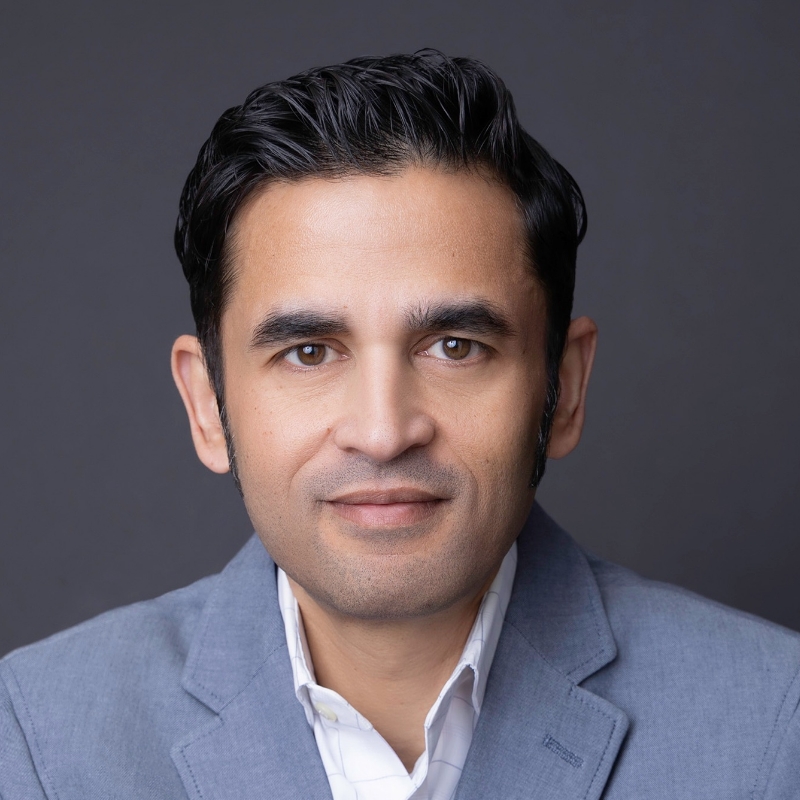
    Director, Digital Experience Optimization, GE HealthCare

  • Ronnie Sarwar

    Ronnie Sarwar

    Sr. Director of Digital Marketing Transformation, GE HealthCare

  • Jonathan Burdette

    Jonathan Burdette

    Global Head of Industry Strategy - Manufacturing, Adobe

Featured Products

Session Resources

Sign in to download session resources

About the Session

Learn how GE HealthCare is transforming its matrix organization into a digitally savvy team. “Creating a world where healthcare has no limits” is an ambitious company mission. And the truth is that it must start internally. Changing the culture of a world-renowned brand isn't easy, but it is imperative to achieving great success. Hear from Ronnie Sarwar and Tom Gores on the journey that GE HealthCare is going through to help transform longstanding traditional methods to modern digital practices as a standalone Fortune 500 company after its spin-off in 2023.

Key takeaways:

  • Overhauling the marketing technology stack
  • Empowering global teams with data and insights
  • Improving operational efficiency and adopting cutting-edge marketing techniques

Industry: Automotive, Healthcare and Life Sciences, Industrial Manufacturing

Technical Level: General Audience

Track: B2B Marketing

Presentation Style: Case/Use Study

Audience: Campaign Manager, Digital Marketer, Marketing Executive, Marketing Practitioner, Marketing Operations , Business Decision Maker, Content Manager, Marketing Technologist

This content is copyrighted by Adobe Inc. Any recording and posting of this content is strictly prohibited.


By accessing resources linked on this page ("Session Resources"), you agree that 1. Resources are Sample Files per our Terms of Use and 2. you will use Session Resources solely as directed by the applicable speaker.

New release

Agentic AI at Adobe

Give your teams the productivity partner and always-on insights they need to deliver true personalization at scale with Adobe Experience Platform Agent Orchestrator.