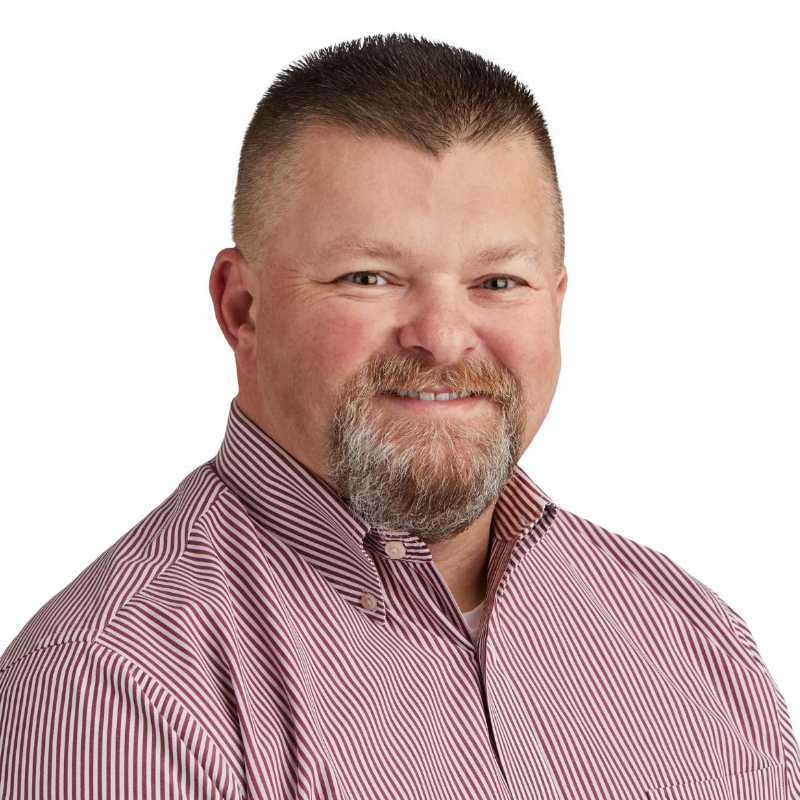
[Music] [Sean McCarthy] All right, everyone. Welcome to our session with our amazing client, Do it Best, and one of our best partners, Publicis Sapient. I'm Sean McCarthy with Adobe. I run our solutions consulting group for retail and consumer goods. And it's my pleasure to help tell this amazing story with our folks here. So Do it Best, if you don't know, their journey lately has been to bring about 3,000 independent member businesses under one platform. So if you think about the undertaking of that is to bring 3,000 different separate member businesses together on one platform to drive growth and create efficiencies, it's not trivial, right? So we're going to hear about that journey all along the way. So with me today are Allison, Ganesh and Corbin from Do it Best, so if you folks could just give a little intro to everybody. [Corbin Prows] Sure. Yeah. My name is Corbin Prows, and I'm the Divisional Manager in e-commerce. I'm over the platform development. I've been in the business about 12 years. It's been a great industry to be a part of, and I was in wireless for 18 years prior to that, so I've been able to use a lot of those retail experiences in with what I do now. [Allison Flatjord] I'm Allison Flatjord. I'm the VP of Marketing and Ecommerce, and I actually started at Do it Best the day that we put together RFPs for new solutions providers. So it was definitely a hot start, if you will. I worked in retail for my whole career in e-commerce and in marketing. [Ganesh Rangarajan] Great. And thanks to both Corbin and Allison for being here. My name is Ganesh Rangarajan. I'm a Client Partner at Publicis Sapient. What I thought I would do is talk a little bit about Sapient. There are a couple of slides in the and this is really the Do it Best story. I'm really excited about having you all talk about the journey that we went through together.
Little bit about Sapient, if I move-- Well, I'll cover the agenda a little bit. Right? So we'll go through introductions, and then we'll talk a little bit about Do it Best as a company, what they do, and then the case for change. And Corbin will go through the case for change in the partner selection process, how they picked Adobe, how they picked pools of Sapient, talk about the launch and the site. You'll get to see some aspects of the site. And then what's ahead and we'll go through for Q&A. So this should take a good 45 to 55 minutes, and you'll have hopefully time to ask questions as well.
A little bit about Sapient.
I was just reminiscing with the number of people here at Sapient that have been-- We've been Adobe partners for 15 years. In the early days of Adobe, even Omniture and what was known as Omniture back then. And so we've been a partner of Adobe, Diamond sponsor here. We've been partner for 15 plus years. Actually, some of the biggest challenges in the Adobe in terms of making the platform work for some of the larger clients, we've been part of that and very excited about our partnership.
You'll see some of that.
Adobe partnership is one of the largest partnerships for Sapient with the hyperscalers. We work with a number of others, but Adobe is very important partnership. Seven plus years, we are the experience platform partner of the year for Adobe. We've been excited about that. And a little bit about Sapient in terms of one of the things I like having clients up here and talking with us because we have a very strong partnership and relationship with our clients. Many of them have been clients for five, six, seven years and on. Our average tenure is over 10 plus years in many of our cases. So excited about that. A little bit about who Publicis is. Sapient, as we mentioned, is a digital transformation arm of Publicis. Publicis is one of the top three advertising agencies in the world. Right? So we are the digital transformation arm. We do all of the engineering work and platform setup and all of that. But you'll see the Pub Media, Pub comm and then Epsilon. We have identity information for about 90% of the consumers worldwide. So we know exactly what they buy. We have data points for them. So if you think about the entire orchestration of a journey, we are going to acquire customers. Who do you target? How do you target and get them? In fact, even for doing best, we have started to use some of the Epsilon services as part of our end-to-end strategy, And you'll hear about some of our launch journey.
One other thing, we have a number of people from the Sapient team. I'm just a client partner. We have Meghna. We have Vishal. We have Jayanti. We have a team, Arthur and others on and Chetan in India. So we are part of a larger group of people that have been working with Do it Best for the last couple of years. So we would not be here without their help and their support. So thank you to all of them.
Very quickly, we'll go through Do it Best background. Yeah. So, Allison, maybe if you could tell us a little bit more about the business model, how that works, the history of Do it Best. Yeah. So Do it Best is probably one of the biggest companies that you've never heard of. We are the largest privately held company in the state of Indiana, and we are a supplier of hardware, lumber and building materials to independent hardware dealers. So in your community, if you have a local hardware store and it's not an ACE, it's probably supplied by Do it Best. I also think we're really unique in our business model and just our overall strategy. We are a co-op, which means our customers are our owners as well. So we call them member owners, and our board is made up entirely of member owners. And at the end of each fiscal year, we return all of our profits to member owners. So we really exist to make our independent retailers successful.
There's an interesting phrase that I think you folks use called champion of the independence based on your model. Could you tell us a little bit more about that? Yeah. So champion of independence is our brand statement, and it really does encompass everything that we're trying to do and that we are here to do, and that is really to serve independent businesses. So again, local hardware stores, local lumber yards, the people that they're competing against are big box retailers. So they'll never outspend a Best Buy, they'll never outspend a Lowe's, and for us it's really important that they still have a place in the hardware industry. And so we do everything we can from collating purchases and getting discounts on product to offering services. E-commerce is one of them to make our members successful. And so we really think of ourselves as the champion of independence.
So if you think about what you folks are doing with True Value, how does that play into the strategy? And tell us about the future of Do it Best and True Value coming together. Yeah. So True Value is exciting for us because probably most of you have heard of True Value. So Do it Best doesn't have to be the largest company that no one's ever heard of. Back in November, True Value was going through bankruptcy, and Do it Best really stepped up, again, our mission of serving independent hardware stores and bought the company out of bankruptcy. And that allowed us to bring on 4,000 more retail locations. So we have 4,000 now. We doubled it in November. It also kept that spirit alive of helping independent businesses fight off the bigger box competition. So for us, it's been a game changer and is really exciting to have a well-known brand like True Value. Yep. And now the largest, independent provider of home care. - Right? - Yeah. So we're now the largest provider. We're the largest hardware supplier in the world. We serve about 8,000 plus locations. So we're now the big dogs, and it's fun to be in that position. So with all these great exciting changes comes lots of new questions and technology things to figure out. So Corbin, let's turn it to you for a little bit. You think about this journey that Do it Best was on and increased the complexity now with the merger, right? Lots of things to figure out. So your journey started about a decade ago with e-commerce, it sounds like. What prompted you to think about going to a new e-commerce platform and bringing all the member sites together? Sure. So we've actually been in e-commerce since about, I think, around '99. And for our industry, that's a long time. We actually were in fairly early, but the approach over all those years was really about enablement. How do we enable our members to be involved in e-commerce? And so there was a doitbest.com, but there was also a Conley's hardware.com and a Frank's hardware.com and so on and so forth. And for years, we focused on how do we enable them, how do we maybe teach them some of the best practices, and how do we give them tools, and how do we try to make the thing a little bit better. But over time, it had just grown bigger and bigger, but yet our piece of the pie, and I'm referring to why I say our members, piece of the pie had not really grown to the size it should have been. And so there came this decision just a couple years ago right before Allison came in, this whole discussion of we need to do things differently. And so part of that idea was how do we take 700 separate sites and a single doitbest.com and move away from just enabling our members, but to more helping them drive sales through a site into their stores and bring it all into one place. One thing that not only did commerce, but actually allowed for true marketing efforts to go along with it. And so that was the premise for why we need to make a change.
Awesome. So it's a big journey. It's a big lift. You need help, right? Can't do it alone, right? So you have a lot of different technology vendors and partners to evaluate.
Allison and Corbin, in your mind, what are some of the decision criteria? What are some of the things that were important to you when thinking about who are the right partners for us? Yeah. So first and foremost, we are a complex business. We will not be able to describe all that today, but just Publicis, I mean that you can ask him about the crying that went on at times. There's just a level of complexity there. So to match complexity, you got to make sure the right level of capability is there. So for us, it was really about identifying what those capabilities needed to be, both from a sizing perspective, but also then from a-- Again, we didn't want to just do commerce, but how do we bring in things like loyalty? And how do we start understanding the customer better? And how do we create analytics for each one of those stores? Because they want to know how well they're doing. And by the way, when you have a single one site, Google only gives you Google Analytics. It's like, how do we actually create analytics for all these places? So it really became about capabilities and putting those things first. And I think that was part one, and I think culture, I mean, I don't know. - What are your thoughts over there? - Yeah. So the other thing, so for Do it Best, this investment in e-commerce was a very big one for them. As Corbin mentioned, before we had outsourced e-commerce and had relied on all of our retailers to run their own sites. This was a conscious choice to really invest in a platform that would allow us to do a lot of the backend work on e-commerce and let our members sell. And since this was such a big investment, we created a separate division. We also wanted to make sure that we were looking for a partner that could grow with us. And so one of the most important things for me in the selection was making sure that whichever provider we went with had a very strong road map. Do it Best was just scratching the surface of e-commerce. We weren't ready to re-platform in two years, so we needed something that we were in it with for the long haul. I would say the same thing with a partner. Do it Best is not heavily staffed. We don't have a giant e-commerce team. So from a partner perspective, we also needed somebody that could do a lot of the heavy lifting for us. And so those were a few of the things that we were looking for at the very beginning of our search. Yeah. I think what was interesting was, and we were given some advice was, because of the size of what we were doing, we actually had to make one key decision, and that was that we were needed a tier one provider. And so you go in there and you look at the Gartner, where they at, and we got to make sure everybody's in top right quadrant. But that also was true as it related to our integrator, and it was good advice. It was advice like the complexity of what you're doing and the fact that you need flexibility and scale. You need to not look at how do you build up from something. You need to make sure you have the right horsepower to start with. And I think that turned out to be a good key point for us. Excellent. Yeah, you've mentioned several different things as to why Adobe and Sapient were a good fit eventually. But is there one thing that stands out for maybe for each of you on Adobe and Sapient that really shown through above and beyond everyone else you were looking at? Yeah. I mean, for me, I would say this is for really both groups that both Sapient and Adobe were able to answer our questions very specifically and with a very good knowledge of our business. So obviously, we hadn't spent a lot of time together going through the RFP process. There were maybe four or five meetings, but I was really impressed with both teams' ability to quickly understand. They didn't pretend to understand the entire business, but they understood what was important to us and what the key parts of our business were and they were able to answer tech specific questions at a very detailed level that showed that they understood our business. So I was really impressed that I felt like both teams went beyond the initial selling process. Yeah. It was an impressive two weeks.
We did three providers in back to back to back days for three-hour meetings of RFP presentations for the provider, and then the following week, we did the integrators. And so there was a real easy ability to compare where things were at. And so as we looked at Adobe and we really understood how that was going to fit for us because one of the decisions we also made was were we going to go best in class, meaning we're going to go pick all these different elements of different systems and try to peel them together and see if they would fit, or we're going to go best in suite. And so we made that early decision of best in suite. And so why that played a part is when Adobe came in, they did a great job of really showing how from that RFP perspective, they were going to be able to fit each one of those things and make each one of these parts work for what we were doing. And then from that, they showed us both the flexibility and the scalability, which for us is very important because, again, we just merged with True Value. The first question on our minds was do we have an e-commerce platform that will be able to scale? It's like, no. We already know that we have a suite of products that can scale because of those decisions and how we made them. And that was really the comfort that Adobe brought to us in those meetings. Great. And, Sean, I'll just add, any of these are complex partnerships and relationships. The key is you need to know whether it'll stand the test of the hard parts of this. Right? Because it's never always going to be a bed of roses. Right? There's going to be times when you do hit the challenge. Right? And can you very clearly with the same purpose, with the same goal, have that conversation? It could be a hard conversation, but can you have it? And can you come out at the other end of it smiling? Right? And I think that's-- And we'll talk a little bit about the journey. We've implemented every single Adobe product that's in their SKU set. Right? And we did all of that within a year. Right? So from RTCDP to AJO to AEP to AEM to CJA, the entire stack was implemented in a year. Yep. And you folks have learned to have the hard conversations, walk away, coming together with an agreement. - That's great. - That's right. So it's a partnership. So for anyone in the services industry, know that it's equally important for you to have that partnership with the client. - Yeah. - Good point. So we've been talking a lot about the journey. Why don't we show you a little bit of it? So, Allison, Corbin, I think, we have a little video, if you want to tee it up. Yeah. So one of the big parts of Do it Best moving into e-commerce was we had to get our membership or our retailers excited about it. So we had Sapiens help on putting together this video that we showed at one of our sales conferences a few years ago.
[Man] Your customers, they're dreaming. They're planning.
They're making.
And Do it Best is empowering you to meet their needs even better with an all new e-commerce platform...
A best-in-class digital experience that will drive traffic to your store...
Power up your sales, and deepen the loyalty of your customers.
It gives your customers simplified pathways to purchase.
Intuitive navigation increases the speed and ease of browsing...
And search is faster and smarter.
It's an experience that helps your customers make more informed purchase decisions by providing the inspiration...
The information, and the shopping tools to assess which products best meet their needs.
It's an experience that helps them get what they need quicker...
By directly shopping your in-stock inventory for same day pickup...
And providing helpful recommendations along the way.
It's an experience with a streamlined checkout process that reduces steps and minimizes friction.
But most of all, it's an experience that drives greater loyalty from the customers you serve each day.
And provides seamless integration between online and your store.
So your customers get the best-in-class digital experience and the personal attention and community support of your local independent business.
Coming this summer. Powered by Do it Best.
So once we said coming this summer, Sapient was on the hook.
So it was hard. - We have to make sure that-- - Yeah. - Yeah. That was interesting. - Yeah. So that's, obviously, a great story coming to life that we've all seen, but it has to start somewhere. Right? And I'm sure there's a million places that you can start in figuring out what are all the things we need to solve. So, Ganesh, how did you and the Sapient team figure out what the Do it Best team, like, where do we start? How do we start on this journey? What are the first things that we do? Yeah. No.
Once the MSAs were in place, which always-- Again, we went very, very quickly through all of that.
We landed a very small discovery team. We brought in-- At Sapient, we call it speed. So we have strategy, product, experience, and then data that's part of that...
Five capability disciplines. And we sat in workshop exercises over eight-week period with the Do it Best team. We needed quite a bit of, if you will, understanding of Do it Best and the product set and technology and what existed. And we'll talk a little bit about the complexity but imagine 8,000, I mean sorry, 4,000 plus stores, but we are actually bringing in customer data. Each of these members had their own inventory, so it's a fairly massive exercise. And then you're bringing in content. How do you actually plan for all of that? So during that eight-week discovery, and then that wrapped up in right about October 2022. So this goes back a couple of years. And then we had the implementation team get going on it. And so it's a global team. We had people from Romania. We had people from India. We had people in the North America region. We had experienced folks. We had data folks to how do you bring all of that data together. How do you interact with the PIM? How do you bring all of that into a same place? And we launched in summer of 2023.
Excellent. So let's talk about how you were able to sell this internally, Allison. Right? So I mean, I look at you as the customer advocate, the member advocate, right, to bring all this goodness to them. Right? But you have to convince people. Right? And how do you get it up the priority list and get budget? And they get all these groups talking between IT and marketing and digital and then legal, finance, everybody under the sun. It's almost a full time job I'm sure. So tell us a little bit about your journey bringing this to life inside Do it Best. Yeah. So a lot of credit to our CEO and our executive team. Our CEO spent a lot of time...
Building excitement and enthusiasm for the idea of getting serious about e-commerce. So without his support, it would have been an even more difficult road. I think after that, we had really three groups that we had to get on board. The first one was our internal team. So a little bit about Do it Best. It's been around for 80 years, and a lot of the things that Do it Best was doing have also been around for 80 years. So there weren't a lot of people necessarily that were like, yay, change. Let's do it. And so with employees, it was really painting a picture of the vision and the necessity to move online. Then with our retailers and members, they actually were pretty excited about e-commerce. With them, it was really getting them off of a specific feature conversation. So I'd like it to do this, this, and that, and more again showing what e-commerce could unlock for their business. And then I would say there was a fair amount of time that I spent with our CFO on the investment and how quickly it would turn an ROI. And that was another big constituent that a lot of it was just painting the picture for him, sharing the vision. And it did not hurt that we had great partners that were keeping the project on track. So that made a lot of my conversations much easier. But overall, I think it was that consistent painting of the picture of where we're going, and then delivering results as we went that really helped us.
Great. All right. Corbin, let's talk a little bit about the Adobe platform that you're leveraging for a large variety of things, right? But are there some specific examples that you have that come to mind when you think about, they're bringing the most values and most impact to your members? Sure. And that's a tough question, because we are using the entire suite at this point. But just to paint the picture, back when we started the project, we had about 700 sites, and there were, I don't know, 1,900 stores participating. So even though we have 3,000 to 4,000 stores and all that, not everybody participates because they are independent. They get to make choices. So with rolling all this out and through the vision that was cast and all this excitement that was created, we have started to watch as our membership have bought in more and more. So today, we sit more around the idea of 1,400 microsites on a single platform. And you got to think about that for a minute. It's an easy number to spit out, but I'm talking 1,400 types of websites. People with their stores' data and information, who they are, SEO, the whole 9 yards built into it. I don't even want to think about rebuilding it all. That's a side note but 1,400 of those. We have increased our store count by over 20% in that time period. And at the same time, we've had 750 of our locations start actually bringing their data into the site, which means product data, inventory data, retail prices, each one of them being different, promotional data, all in a way to help show who they are and their uniqueness. So that does take a combination of both Commerce from Adobe but also a lot of work from AEM. And there's actually, we've talked about just earlier about AEM. We can actually spin up a microsite with dynamic media, media that changes on a regular basis for our member. We can actually create a site in 15 minutes. If you provide me with some store information and a logo, I can actually have it built and in place. Now that's the beginning. By all means, they can continue to add more and more information to the site, more and more SEO, things of that sort. But that doesn't happen on its own. That is truly a combination of Adobe, along with some creative thinking from Publicis Sapient in helping us really accomplish in what we're doing.
Great. Thank you. So whenever you look at a transformation of this size, and we talk about how many members that you have to work with, right? Besides selecting the right technology that's going to work for everyone, then you have to get everybody on board to adopt it and use it and leverage it to the best that it can be. So what are some of the strategies that you put in place to make sure that you were working with your members to make sure that they were adopting the technologies, they felt empowered, they felt that they were going to get value out of doing some of this change and changing the way that they historically worked.
Yeah. So there's a couple of different things. One, for us is creating imagery and examples and things of that sort.
Independent hardware, these folks, they're amazing. They're great retailers. Some of them are fourth and fifth generation. You think about that. I mean, this is a-- I have always wanted to work with helping people do their business better, and that's what we're doing here. But they're not e-commerce website gurus. And so they understand how to do retail and do it well, and it was really our job, and Allison kind of alluded to it. How do we take that off their plate? So creating these great examples and helping communicate those things, I think was that first step. And then there has been a whole lot of testing since then. And I'm now talking about testing of offers and testing of different ways of reaching customers and working with those individual members to come up with ideas that they also have and working with our ideas on finding the things that work because there's nobody that tells the story better in our industry than one independent retailer telling another one. We can do it all day long, but when they hear one of their other folks say this is how I'm being successful, that's when we get our best increase. Yeah. And I would also say we spent about a year before launch just talking about e-commerce, making sure we were mentioning it at meetings, etcetera, etcetera, to get everybody excited. But we also knew that once everyone was excited, we needed to have some fast action. So we couldn't onboard one retailer a month. People would be really tired really fast. And so Sapient actually helped us with migration services as well. So we put together a plan that said, we're going to do all of these things to get everybody all excited. But when we do that, we need to be able to mass onboard our retailers. And that was a service that we didn't even know at the time that that Publicis Sapient offered, but that was key in making sure we were maintaining momentum and that we were growing the people that were interested with every month. So that was a big deal for us as well. Excellent. All right. Let's talk a little bit about some key takeaways, some learnings, and what's ahead. So anytime you implement a set of technologies this size, I'm sure it's totally going to go smoothly at all times. Oh, yeah. Perfect. Think Corbin stopped sleeping for a couple of months there. So for the folks in the audience, I think this is one of the most valuable things that they can take away. What did you learn during that time? Like, was there any missteps? Was there things that you would have done differently? Are there things that you could share with the folks here that would maybe make their journey smoother? Well, first off, if you're going to live in a conference room for three months, bring your desk chair, not the one that's in the conference room. I don't know why it took us two months before we figured that one out. But no, in all seriousness, this was complex. We knew it going in. And with complexity means that there are things that you run into as you go. And our biggest problem was just our huge amounts of data. And so we had to get really creative, and it took combination of both Publicis and Adobe rethinking things at times and help us truly think outside the box. And I talk about the box because I always was told, it's like, hey you're buying this thing and try not to do any customization. And then, it's like, just use what's out of the box. And then we got there and it's like, that's not going to quite work. But our out of the box wasn't necessarily going and doing something that didn't make sense. It was actually working with Adobe engineers and the folks from Publicis on coming up with something that made sense and was sustainable as we move forward. So we weren't in a situation of suddenly now we're off on our own, which is something we were highly against. Yep. I would say, as far as things that we learned, so we woefully underestimated how bad our data was. We had a database that had 50 years of people manually entering product data. And we knew that. We didn't spend as much time on cleaning it up as we should have at the beginning. So that was a big learning, a mistake I know I will never make again.
I would say the other piece is, I underestimated the level of understanding across the organization of what it takes to implement a platform of this size. And so a lot of times we had the old red, yellow, green. I don't know how many of you use that. But as far as initiative tracking, if it's red, bad. Yellow, okay. Green, good. Anytime our initiative veered into yellow, I would get about 15 calls. What's happening? What's going on? And so I spent a lot of time explaining that most tech projects are always in yellow. You're never 100% sure what could happen. And I would say that the fact that we had Sapient as a partner and Adobe there as resources when we needed to fix problems, when we needed to explain things to our teams, that was really valuable. And, again, that was something that I had underestimated. I really should have talked up how difficult what we were doing was. So I missed that opportunity but those were some big things that that we learned. Yeah. I learned with Allison, do not wear a red shirt to the office. - She thought that-- - Yeah. So I had more green shirts than you ever can know. It didn't matter if we were in yellow. I was only wearing green.
But I think for us, from the lessons learned, it's a very practical thing. It's one of those-- This is a hindsight comment because of-- Sometimes when you make mistakes and you look back and go, that was mistake. But there are other things that are like, now knowing what I know now, what would I have done differently? And for us, for me, it would have been, let's choose our integrator first because we actually chose our platform first because we knew all the integrators could cover everything. And the reason why that was important is just more so we had a little bit better understanding amongst ourselves of how we were looking to go about things, going into it. Now we would be at the exact same spot we are now. We'd have just got there a little bit smoother. And then the other part of it is...
We have this whole suite. We're like, we want all of it. And so we said, build it all and build it now. Well, our team, as Allison mentioned, we run very lean and mean. And so I think, again, we could have probably rolled that out a little bit more in stages, not significantly longer timelines, but at least a little bit more in stages, and probably had a little bit smoother rollout, just as we were learning internally. I don't know if the external people would have noticed the difference, but we sure would have internally. But that's, again, a couple learnings. Yeah. Great insights. - Ganesh, anything? - Yeah. No. And I was looking at some of what we implemented, and sometimes I scratch, man, how did we do this? Right? So within a year, and I think I've emphasized that already, we're talking about member microsites being built, and we got essentially 800 plus members. I think 1,300 is the last number we saw. Now 1,300 independent sites that are all rolled into a single Adobe platform. Right? Which means within minutes, you're onboarding some of the simpler members with promos, category, global content across, and you don't have to do that for each site. So it'll be built in and the platform supports it. Adobe Target for personalization. Right? So all of the personalization at scale conversations you're having, we have that built into the platform and supported from the get go. Magento, I don't know how many people are actually implementing commerce with Magento. But when we started, a number of those pieces had to be tied together. Right? So to have Magento platform work with AEM so the sites can deliver that content, pretty scale. And then, we talked about some of the members. What we haven't talked about is the member data. Each member has their own inventory. So there's a big data rationalization project. How do you bring all of that together? So think about each member having, what would you say, 50,000, 60,000 SKUs? - Yep. - Very typical for a store. Very typical for a store. And then they have store that has SKUs that are provided by Do it Best, and then they have independent inventory outside. You're trying to bring all of that together. So now you multiply the scale, then you start to see how big their inventory model is and how much data needed to support. And, frankly, I don't think that any other platform outside of Adobe could have done it. Right? And if you think about the marketplace, right, essentially, what we've built is a marketplace where you have multiple member stores running their platforms within the single, I mean, the scales are just-- - Amazing. - Right? It's hard to your point. I don't think we should have taken it all on day one. We could have sequenced it, but we would probably be at the same exact place, but with maybe a little less gray hair than we have.
And I'm just looking through some of the others. Right? CJA, AJO, we're sending marketing emails to everybody. Right? Hey, you left your cart behind. So all of that had to come together pretty quickly, although we sequenced it a little bit, they didn't, post launches when we got the emails going and so on and so forth. There's a lot of challenges. Right? And, yeah, you're able to do it. - Yeah. It seems like-- - And we are smiling. Yes. We're here. It seems like the members have quite a lot of ways that they're now getting value from Do it Best, and that's been increasing. - Yes. - Yes. That's great. So as we talk about the future and scale and what's next, now that you're over this mountain, True Value, talk to us about it. Yeah. So I think True Value brings a huge opportunity for e-commerce for us. Right now, even though they're such a well-known brand, they actually don't have a site that customers can shop from. So right now it's really a vanity site, and so there's a lot of potential. Their vanity site gets a lot of traffic. And so for us, we're just thankful that we have great partners that can help us with how we move forward and that we have a robust enough solution that, again, we're not thinking, oh gosh, now we have to re-platform because we're doubling the number of stores we're bringing on. So I think we feel like we're in a really good place with the True Value acquisition, and we're happy to buy more hardware retailers and bring those on as well.
- Not this week. - Not this week. Yeah.
So thinking about some of the latest and greatest technologies out there, there's a lot of new things. We've been hearing a lot about Agentic AI. Everything's about automation and scale. What are some of the ways that you folks are approaching that in your business, just from a high level? Yeah. So I think there's two sides of that for us. First off, there's this practical side of the last two years of everything that's been done. And so on one side is, not answering your question totally, but it's really, it's the year of activation for us, meaning we have to get our members continue to buy in more. And it's not just buying in and saying yes, but actually doing more things that they can do and how they can work with us to really drive business through the site. And so there's that part, and then there's this theme that we have going on in my office, in my group called e-commerce for all. Because remember, we only have 2,200 or 2,100 of those stores doing something. So we have a lot more stores, especially now with True Value that can come on board with it. So we got that going on. So while that's going on, we're also then working with how do we advance this technology to do more for us. So again, our suite of products allows for it. So we need more personalization. So we've got to build more of that in. And then there's more focus on our loyalty programs. We didn't really touch on it, but we have a loyalty program that was in all of our stores. Well, we've never had that integrated online. So now that exists. So how do we actually build off of that more? And so how do we start-- Again, personalization is part of that, but actually getting that, just that standard loyalty aspect of things. And then you start to layer in the AI and those types of pieces, and how do we start to bring that in. So for us, activation, how do we create more personalization? How do we use more out of the platform? And then we'll start continuing to bring in more and more of these pieces to do some of the fun things that we've been looking forward to. Yeah. And I would say a big area we've used AI is GenAI. So we have 1,000,007 products in our PIM...
And we have five people on our content team. So obviously, we're not out and able to do a lot of photoshoots. We're not able to write millions of descriptions at a time. And so GenAI has really been a help for my team in getting a lot of content pushed through quickly. That's been great.
Yeah. Okay. And we have a pretty robust road map that we are going to work on, which, again, Adobe has amazing tools. And in addition to that, we're working on a number of other things. - Great. - So you'll see all of that. Actually, I'd like all of you, if you have a neighborhood hardware store, please go in there. You're helping the local business, and you're helping Do it Best succeed as well. So please do go in because these are-- In fact, when we first started working with Do it Best, that's what excited us. They were on a mission, and we were like, this is an amazing mission. Right? So you're basically going to the Mom And Pop Hardware store that has been around in your local town for 50, 60, 70 years. It's gone through two or three generations, and now they're trying to compete against the big box and the bigger stores. Right? How do you take that small business and that's been in the family, and some of them are larger, actually. Connelly's and others are 70 plus stores. Right? But how do you take that basic ethos of a local neighborhood store and have them compete in the same footing as a Lowe's and a Home Depot and make that journey successful? And they needed to make sure that people have mobile. Like, everyone, the next generation's all going to be on mobile shopping. And if you don't have that capability or the ability to pick up something online ordered in the store, BOPIS, right, then you're not going to attract that customer. They will continue to go to Lowe's and Home Depot. And nothing wrong with those amazing guys. Yeah. But the point is how do you make the-- And so it became a mission for us. It is a mission for us every day, how do we make those folks succeed? Totally. So we'll do one more question for the folks here up on stage, but then we'd love to hear from you folks, after we get through that question. If you have a question from the audience, please go use the mic in the center here. So for everybody up here, if you could talk to the folks in the audience, people embarking on this journey, is there any words of wisdom that you would provide to them, any advice? For me...
Just the idea of partnerships, I mean, this is a basic element. We can sit here and talk about all of the complexity of the things that we've done and the nightmares we ran into that we worked through and got through and how we accomplished certain things. But at the end of the day, I have to say, it is truly about partnership that gets you through. But if you're trying to do something simple, just go hire a vendor and get it done. Just move on. And I look at vendors as somebody you have a transactional relationship with, and it is what it is. You hold them accountable. You get as much out of them as fast as you can and that's done. But if you're really wanting to accomplish something big, the choice of those partners, whether you're talking about an integrator such as Publicis Sapient or you're talking about the suite of products and platform like Adobe, I will tell you, we would not have accomplished what we did if it weren't for that. And their success and our success are directly tied together.
I would also say, definitely use an integrator. So I had done a web re-platform and did not use an integrator and probably the worst year of mine and my company's life. - But I think that was-- - Prior to Do it Best. Prior to Do it Best. Yeah. Prior to Do it Best. But, even in coming to Do it Best, there were a lot of questions like, "Oh, can't you just do this with Adobe? We have IT here. Why can't they implement it?" And I think one of the best decisions we made along with choosing Adobe as a partner is having a very solid integrator that had excellent project management skills, and was able to complement the staff that we had at Do it Best. So even though the cost may seem daunting, it's worth every penny. Take it from somebody who was up for 24 hours a day, several months in a row, trying to do it on our own.
Great. Ganesh, any more questions? No. This is hard stuff. Some of it's very rote. Some of it's pretty straightforward, but it's generally hard. And you're building a business. That's the way to look at it. Right? All of you who are about to go off and do this on your own, you're building a business. You'll have to support a P&L. You'll have to support a growth plan...
Which means that you have to actually make some of the right calls. And then that's our job, right, to make sure you guys are successful and to make sure Do it Best is successful. - That's really what-- - Yeah. We don't look at-- And that's been our history. We don't look at how we are doing as a company. If you guys do well, we will do well, and that's always been our mantra. Thank you so much for being here. Thank you for supporting us. Thanks to Corbin and Allison for being here. Thank you. And do enjoy the rest of the show, please. This is an amazing product set, and it's an amazing conference. So hope you have a very good conference after this as well. Thanks, everyone.
[Music]